





KuCoin EU appointed a new anti-money laundering (AML) head and expanded its compliance team in Vienna, weeks after Austrian regulators banned the exchange from taking on new business under the European Cryptoasset Markets Regulation (MiCA) regime.
Licensed entity MiCA appointed Carmen Kleinhans as its anti-money laundering officer, alongside two deputy AML officers drawn from former Austrian regulators and banking compliance heads. According to a statement on Wednesday, the team will oversee anti-money laundering, counter-terrorism financing (CTF) and sanctions controls, as well as risk management and regulatory engagement across the company.
The move follows a February decision by Austria’s Financial Market Authority (FMA) to ban KuCoin EU from onboarding new clients or signing new contracts after finding that key AML/CTF and sanctions compliance functions were understaffed, violating internal organizational requirements.
The hires mark an effort by the exchange to address those gaps and align more closely with compliance expectations of traditional financial services, as regulators increasingly focus on governance and controls rather than solely technical violations.
Related: Thailand Crypto Platforms Freeze 10,000 Accounts in Anti-Money Laundering Campaign: Report
Increased regulatory pressure on KuCoin
The new staffing initiative also comes against a broader backdrop of increased anti-money laundering scrutiny and sanctions in the cryptocurrency space, with regulators increasingly willing to freeze or partially suspend businesses for governance and staffing failures rather than just technical violations of securities or licensing rules.
A Tuesday report by blockchain security auditor CertiK showed that KuCoin and OKX were among the exchanges hit by some of the largest AML-related sanctions in 2025, highlighting how law enforcement has shifted toward financial controls and crimes rather than solely securities law issues.
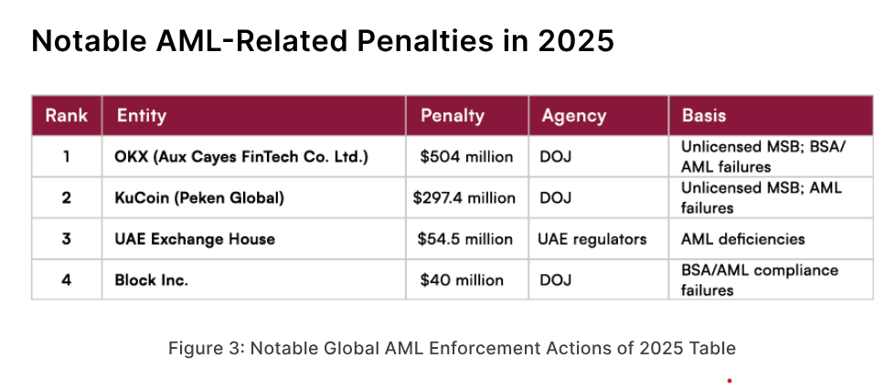
Notable sanctions related to anti-money laundering in 2025. Source: CertiK
At the group level, KuCoin has also faced regulatory action in other jurisdictions. In January 2025, it agreed to pay nearly $300 million and exit the U.S. market for two years in a criminal settlement for unlicensed money transmission and failures to combat money laundering, the Wall Street Journal reported at the time.
On March 30, KuCoin’s parent company agreed to pay a $500,000 civil penalty to resolve a case brought by the U.S. Commodity Futures Trading Commission that alleged it operated an unregistered offshore commodities exchange. Earlier that same month, KuCoin received a warning from the Dubai Virtual Asset Regulatory Authority about allegedly offering virtual asset services in the emirate without the required local license.
Whether the procurements are sufficient to restore normal operations under the Austrian authorization of KuCoin EU now depends on the FMA’s assessment of whether the required control functions have been fully and adequately restored.
Cointelegraph reached out to KuCoin EU for comment but did not receive a response via publication.
Magazine: How AI Just Dramatically Accelerated Bitcoin Quantum Risk


