



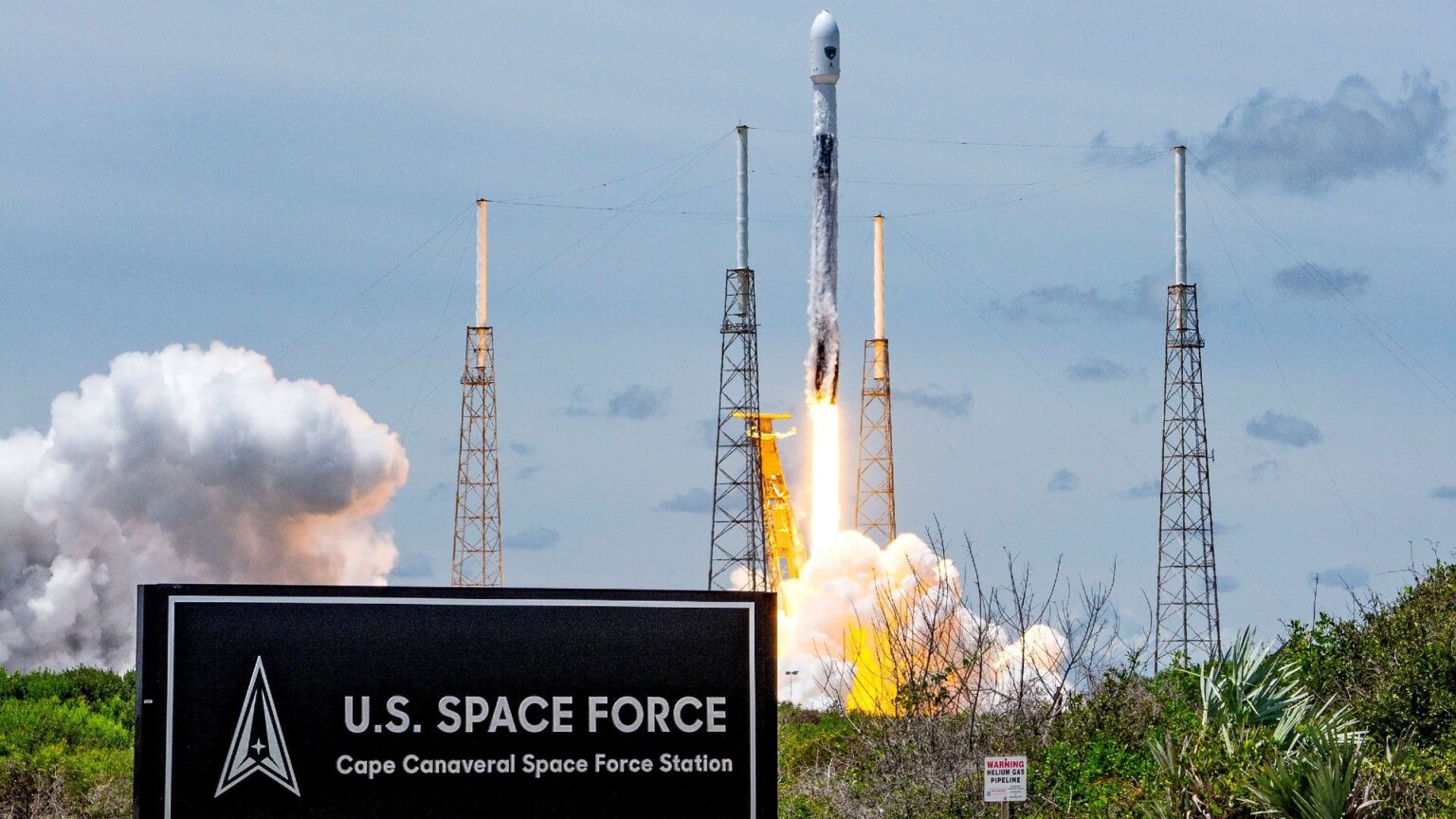

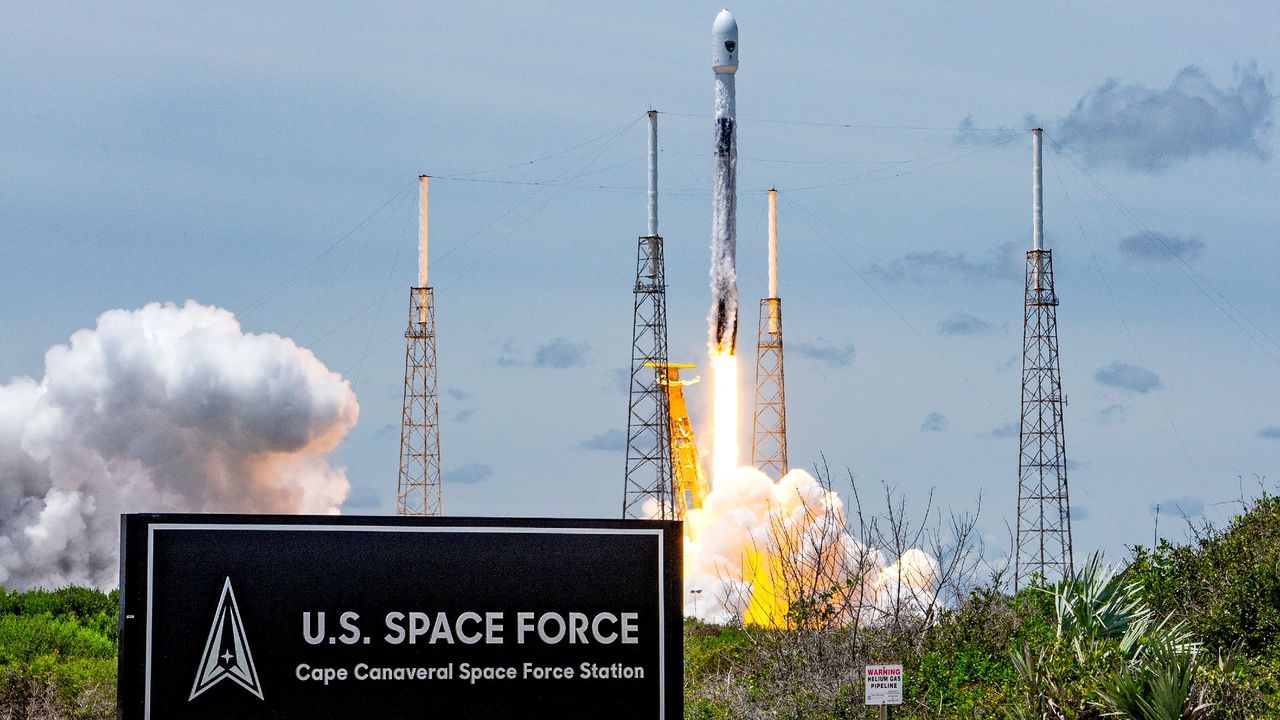
The US Space Force is taking drone threats seriously.
Space Force seeks to increase its capacity to deter and defeat unmanned aerial systems (UAS) in the vicinity of Cape Canaveral Space Force Station and the Eastern Cordillera, the 39 million square kilometer (15 million square mile) stretch of airspace over the Atlantic Ocean through which the United States launches most of its space missions. That’s according to comments made by Col. Brian L. Chatman, director of the Eastern Range.
The new system will also involve testing new experimental technologies developed by the Air Force Research Laboratory and the National Reconnaissance Office, Chatman added. It’s unclear what they might be. But any anti-UAS (C-UAS) system, especially experimental ones, is complicated in such a crowded area.
With a record number of rocket launches and fairly high-density airspace filled with support aircraft of all types, any anti-drone system must be carefully calibrated so as not to interfere with communication, navigation or telemetry of rockets or other vehicles. Many C-UAS systems defeat drones by jamming or interfering with their radio transmissions or navigation systems, which has the potential to interfere with launch operations or other vehicles in the field.
Therefore, adding new C-UAS systems will be a balancing act, Chatman told Breaking Defense, adding that he wants to ensure that these new capabilities “protect and defend the Eastern Range, without having second-order effects that affect other operations.”
“As research labs develop new capabilities, we’re open to bringing them to light, taking a look at what that might look like in the Eastern Range, and then, if we get to deconfliction from the spectrum, giving them the opportunity to go out and test those capabilities,” Chatman said.
However, there are other ways to defeat drones, including using traditional weaponstaking them out of the sky with other drones armed with explosive warheadsor simply charging at them.
There is a clear need for a more robust C-UAS capability at US launch facilities. In January, Canadian citizen Xiao Guang Pan was charged with fly a drone and photograph the launch facilities and ammunition bunkers at Cape Canaveral Space Force Station. After reaching a plea deal, the man was sentenced to 12 months of probation and deported from the United States.
Just a few months earlier, a Chinese citizen and legal resident of California was arrested while trying to board a flight to China after using a drone to Photo Facilities at Vandenberg Space Force Base. The man, Yinpin Zhao, was sentenced to four months in jail and deported.
Drone and UAS incursions have been reported at a large number of other US military installations. in recent yearsalthough in many cases, law enforcement agencies have been unable to attribute them to any particular group or actor, at least publicly.


