




This article was originally published in The conversation. The publication contributed the article to Space.com. Expert voices: opinion articles and opinions.
China routinely sends astronauts to and from its space station Tiangong. A crew capsule is about to undock from the station and return to Earth, but there is nothing routine about its journey home.
space journalist andrew jones how experts on the ground studied images of the damage and concluded that a piece of debris measuring less than 1 mm (approximately 1/25 of an inch) had penetrated from the outer to inner layers of the glass.
Simulations and tests confirmed a low probability that the window could fail during high-temperature re-entry through Earth’s atmosphere. Although it was a worst-case scenario, officials deemed it unacceptable. A rescue mission, Shenzhou-22, was launched to bring back the astronauts from the station.
A small crack in a spacecraft window prompted China’s first emergency launch to the Tiangong space station. A CCTV article reveals what happened over 20 intense days and why a piece of space junk measuring less than 1mm forced emergency response. https://t.co/w8BqnhkH6MDecember 1, 2025
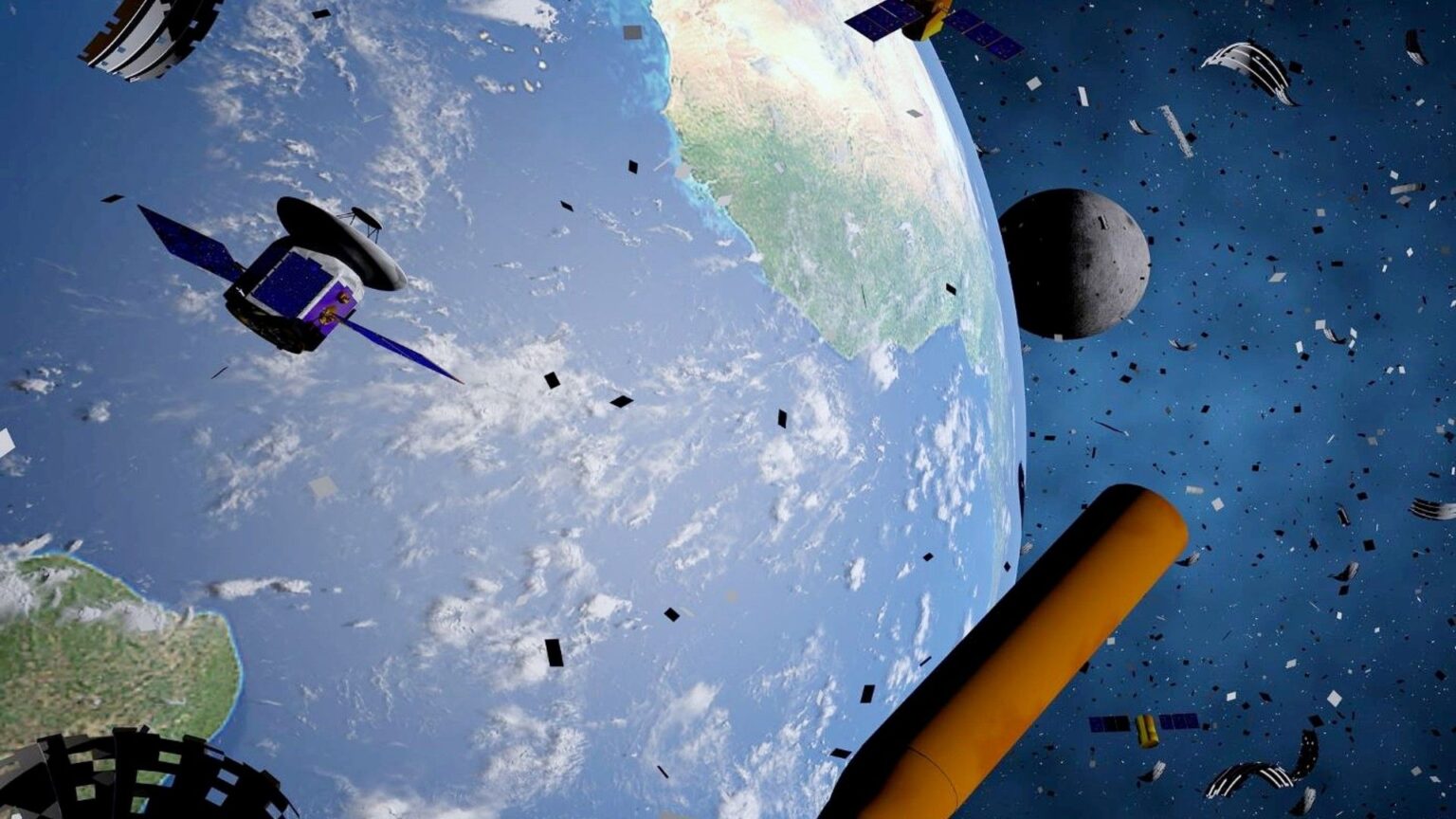
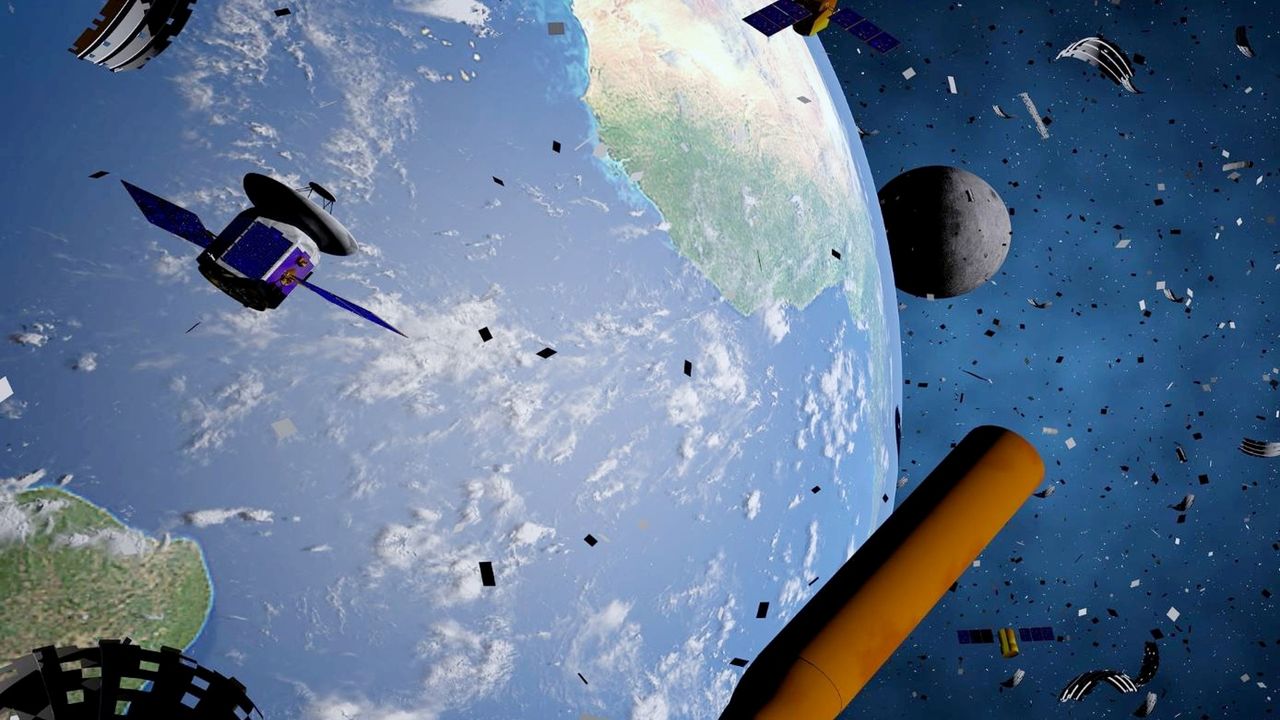
Experts have been warning about the threat posed by space debris for years. The increasing number of space programs by states and private entities is now contributing to an increasingly congested in-orbit environment.
He European Space Agency estimates that there are more than 15,100 tons of material in space that has been launched from Earth. There are 1.2 million debris objects between 1 cm and 10 cm, and 140 million debris objects between 1 mm and 1 cm.
In low orbit they will travel at about 7.6 km/s (approximately 17,000 miles per hour), damaging anything they collide with. This is how a piece less than 1 mm in size managed to penetrate the thick glass of the Shenzhou-20 capsule.
Given the increasing number of objects in orbit, this is likely to happen more frequently. It is costly in terms of damage to equipment and increasingly threatening to life. When a piece of debris hits another object in space, it can also create more space debris, exacerbating the problem.
Several countries can track what is in space, but since these can include classified satellites, states are reluctant to share details. China’s space program is overseen by its military, in line with the view that space is inherently linked to national security. This only adds to the geopolitical tensions between states over the use of space.
Treaties and responsibilities
A total of 117 states are parties to the treaty, but while efforts are underway to develop new norms around space governance, including the creation of the Interinstitutional Space Debris Coordination CommitteeThe organization may provide a platform for cooperation and research, but does not result in binding decisions for state action. The lack of a global agreement on space debris and, more importantly, its repercussions, makes addressing the space debris problem even more difficult.
Technology is being developed to address space debris, but this usually appears as conceptual mission plans with only a few test runs launched anywhere in the world. Examples include the idea of a harpoon to collect large pieces, although the recoil of such an instrument means that the spacecraft deploying it could become a new piece of debris.
An alternative is the highly technological approach of a great network. This will work in the sense that if you can slow down the debris, it will fall into the atmosphere and burn up.
The problem with these methods is the lack of sustainability: sending a satellite to shoot down just a few pieces consumes fuel, which increases climate variation. An appropriate and efficient solution would be a constellation of satellites that remain in orbit and lower debris. The process, of course, is still something that needs to be investigated.
A terrestrial solution is bromine laserwhich uses laser pulses to slow down objects orbiting Earth, potentially allowing them to re-enter the atmosphere and burn up. However, it remains untested and has its own potential problems, such as atmospheric warming and failure to meet its target.
However, without addressing the geopolitics of space governance, space debris removal is debatable as the focus on national interests, security concerns and the growing presence of the private sector means that pollution in Earth orbit is occurring faster than we can clean it up.
Any collision results in many more pieces being produced than can be collected, some notable examples include China’s 2007 destruction of its own Fengyun-1C satellite as part of an anti-satellite weapon test. This added an estimated 3,500 pieces to orbit.
In 2009, a Russian satellite called Cosmos 2251 collided with an Iridium communications satellite, generating approximately 2,400 pieces of debris. In 2021, Russia carried out its own anti-satellite missile test, destroying the Cosmos 1408 satellite and generating another 1,787 pieces. Most of them returned through the atmosphere, but 400 pieces remained in orbit.
If so anti-satellite weapon It is unlikely that it can be reused for space debris removal, but it has potential.
It will require a concerted global effort and cooperation to not only indicate which spacecraft states and private companies have in space, but also to commit to deorbiting all future spacecraft at the end of their useful life, reducing future debris.
The current European Space Agency Space Debris Mitigation Standards. Note that any satellite must be deorbited within 25 years following the end of its operations. While this also applies to thumbnails”“cubesats” – the process to reduce them has not yet been demonstrated.
Ultimately, this debris will cause problems for all space launch agencies and private companies, as there is a limit to our ground-based monitoring and warning capabilities. This makes addressing the global governance of space essential. However, it may take several high-cost satellites being taken out of service, or lives lost, for this issue to be taken seriously.


