

Binance CEO Richard Teng has rejected a new Wall Street Journal investigation that claims the exchange processed $850 million in transactions linked to a sanctioned Iranian financier, which ultimately flowed to Iran’s Islamic Revolutionary Guard Corps.
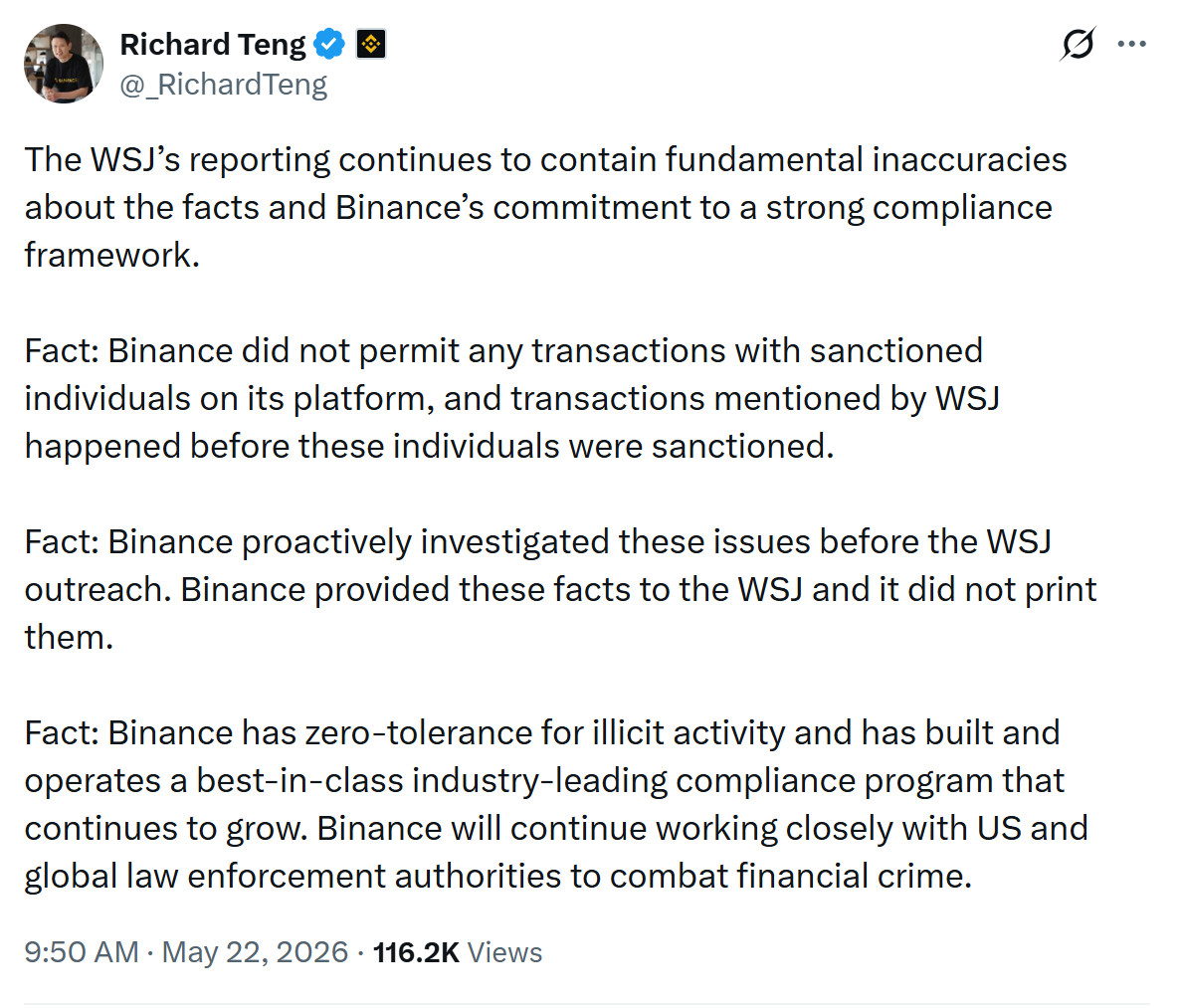
In a Friday post on He also claimed that Binance had investigated the issues before the Journal contacted the company, and that the data it provided was not included in the story.
The Journal report, published Thursday, identified Babak Zanjani, who was sanctioned again by the United States in January, as the central figure of a secret crypto payments network that managed $850 million through Binance accounts over two years. Zanjani’s company Zedcex, along with the accounts of his sister, his romantic partner and the company’s director, operated from the same devices, according to the report.
Fountain: Richard Teng
The Journal claims that Binance’s internal compliance reports flagged the Zedcex account after detecting access from Tehran in late 2024. The account remained open for more than a year, triggering more than a dozen additional internal alerts. Binance’s own researchers recommended that the accounts be closed and reported to authorities, but the Journal says the accounts remained active.
Related: Binance Launches SpaceX-Linked Perpetual Futures Ahead of IPO
Binance allowed Iranian funds after deal: WSJ
Binance was found guilty in 2023 of sanctions violations and anti-money laundering and paid a record fine of $4.3 billion, pledging to review its compliance systems. However, according to the Journal, the alleged Iranian fund flows resumed shortly afterward.
In March, the Journal also reported that the Justice Department is now investigating Iran’s use of Binance to evade sanctions in the wake of that guilty plea. Following the report, Binance filed a defamation lawsuit against the publication, seeking damages and a jury trial. The exchange denied knowledge of any Justice Department investigation and told Cointelegraph that it continues to cooperate with regulators and authorities.
Beyond Zanjani’s network, the Journal claimed that Iran’s central bank moved $107 million in cryptocurrency into Binance accounts in 2025, and a foreign law enforcement agency tracked approximately $260 million in direct transactions between Binance accounts and Iranian terrorist financiers during 2024 and 2025.
“Binance has zero tolerance for illicit activities and has built and operates an industry-leading, best-in-class compliance program that continues to grow,” Teng wrote on X.
Related: Binance Says AI-Powered Security Has Thwarted $10 Billion Fraud Since 2025
Binance denies closing internal Iran investigation
In February, another Journal report alleged that Binance closed an internal investigation into approximately $1 billion flowing through the platform to networks linked to Iranian proxy groups. Binance denied dismantling any compliance investigation, saying its internal investigation continued and uncovered a sophisticated, multi-jurisdictional pattern of financial activity in Asia, the Middle East and beyond.
The exchange also published a blog post addressing what it called false claims, and responded separately to a Senate investigation in March, denying that it had facilitated transactions to Iranian entities.
Magazine: Guide to the Top Emerging Crypto Hubs Globally: Mid-2026