
As an immigrant and then a citizen, more than 50 Fourths of July have taught me to love the exuberance of the day: backyard barbecues, tailgate parties, and outings like setting out on a small boat to join thousands of others on a sunlit lake. The parades and fireworks added flourish, but what I remember most was the community revelry: neighbors and strangers laughing, sharing stories, sharing food, and celebrating the day together. Bright shirts and breezy shorts in the colors of the flag offered a casual nod to the occasion. But “freedom” or “freedom” was rarely talked about, much less the Declaration of Independence. Over time, I came to understand that those founding republican principles had become living rituals that united the community through shared values.
There was no single authority dictating how the day should be observed; each town, district and city had its own traditions. In the 1970s, as a reporter for a small New Jersey newspaper, I attended countless town meetings where mayors and planning boards deliberated on local issues. As I told my stories, I was struck by the enormous local variations in celebrations. Some honored veterans or local heroes with formal speeches; others celebrated with neighborhood parties or picnics; others focused the day on municipal fairs or exhibitions. Those who had the means set up fireworks and live music. Each community, in its own way, embodied the character of the American republic: independent but united in celebration.
It seems that this has been the case for at least two centuries. The French observer of America, Alexis de Tocqueville, upon witnessing a fourth of july celebration in 1831 in Albany, New York, he recorded in his notebook how simple and sincere the event was, noting: “There is no police, there is no authority anywhere.”
This year, that sense of community unity appears to be at risk. President donald trump He is shaping the national spirit of celebration by declaring that he will be the main attraction as “the greatest president in history.” It will appear on commemorative gold coins described by the Treasury as “the enduring spirit of our country and democracy.” There will be a celebration on the National Mall in Washington, DC, with military bands, flyovers and musical performances.
What should be a unifying national commemoration of this special milestone is shaping up to be a partisan spectacle celebrating the power and character of the president. The show ignores what truly makes America exceptional at this moment in the fourth millennium: advances in biomedicine that save lives; advances in chip design and connectivity that are reshaping work and daily life; a richly funded higher education system that encourages independent research and attracts global talent; and an ecosystem of financial capital and entrepreneurial culture that turns bold ideas into products, businesses, and even civil space companies. The values that made all of this possible must take center stage so as not to distract from the community spirit that truly marks the day.
The nation’s leader is known to set the tone and messages on America’s birthday. A study of other presidents’ Fourth of July speeches shows a consistent theme that encouraged national unity. Bill Clinton, George W. Bush and Barack Obama supported family festivities that mixed music, military honors and calls for civic unity. Abraham Lincoln used public rhetoric about unity and national purpose; Franklin D. Roosevelt linked celebrations to broader policies and moralities during the Depression and World War II; Dwight Eisenhower highlighted veterans, national institutions, and centrist unity; John F. Kennedy and Lyndon Johnson combined inspiring rhetoric on themes from the era of civic duty and civil rights.
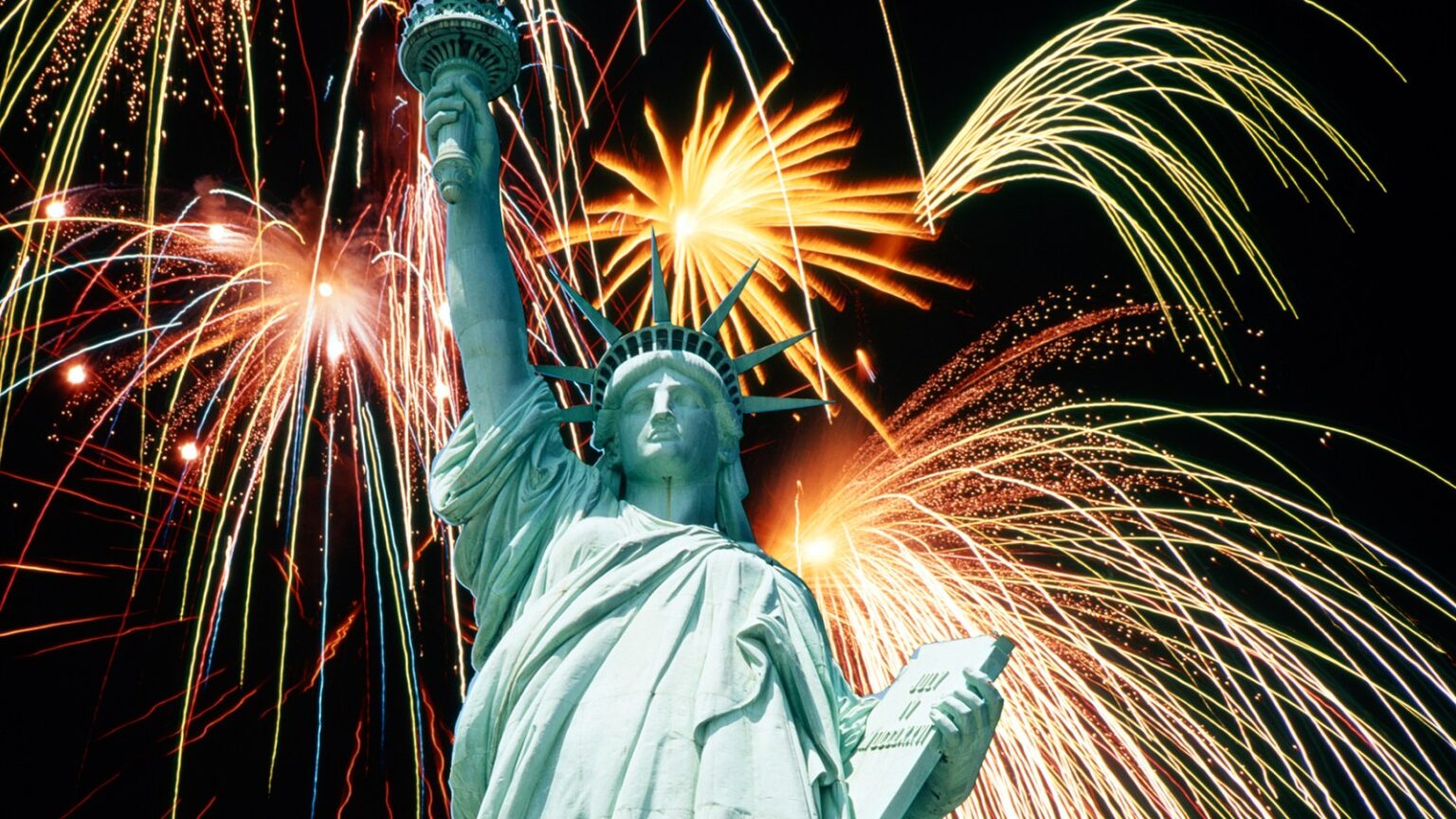
The Fourth of July that was of great importance to me was the 100th anniversary of the Statue of Liberty in 1986. That was the day I became an American. It was chaired by then-President Ronald Reagan. He was also a polarizing figure, as his aversion to affirmative action, his enforcement of civil rights, his harsh labor management, and his covert arms deals with Iran that led to accusations of abuse of executive power had deeply divided the nation.
But the spectacle to commemorate Lady Liberty focused on welcome and common purpose. “Believe me,” Reagan told the nation, “if there is one impression I carry with me after the privilege of holding for five and a half years the office held by Adams, Jefferson and Lincoln, it is this: that the things that unite us – America’s past of which we are so proud, our hopes and aspirations for the future of the world and this beloved country – outweigh the little that divides us.”
True to the spirit of the occasion, the United States hosted ceremonies across the country in which thousands of immigrants took the oath to become Americans; 300 were transported to Ellis Island to swear allegiance under the watchful eye of the Statue of Liberty, herself an immigrant. So that no state in the union would feel excluded from its altar, each sent a representative to Ellis Island. I was among them, a citizen of India, representing the state of Michigan. We walked through cheering crowds, five and six rows deep, to an even larger welcoming party: American tall ships, frigates, and aircraft carriers, and thousands of small pleasure craft packed into the harbor. Chief Justice Warren Burger was sworn in, and just as we made good on our promise, the harbor erupted in cheers, foghorns, and fireworks.
There wasn’t a dry eye around. Through tears, I waved the small American flag I had clutched during the Pledge of Allegiance before the vast armada of humanity in the harbor, not simply because I had become an American but because I was amazed by America’s capacity for generosity in welcoming us, many of them from war-torn countries like Vietnam, Iraq, and Iran.
That day today seems like a fleeting dream. The United States is no longer the same; His generosity is worn out. Terrorist attacks at home and abroad have hardened public attitudes toward immigrants. It hasn’t helped that those who became Americans have remained silent or have not raised their voices enough to denounce the terrorism exported from their former countries. At the same time, cultural change in the United States—debates over language, history, and memorials—has produced resentments. Some see sanitizing textbooks, removing statues or elevating other languages as an erosion of a shared identity. Economic dislocation and political disconnection have only worsened divisions over politics, race, culture, gender, immigration and inequality, all closely intertwined.
Trump has promised to remake America and has been systematically dismantling existing norms and institutions.
His supporters see his actions, though harsh, as a necessary disruption. There is a temptation to express that disturbance in mythical terms. In Hindu mythology, the cosmos is ruled by a triumvirate of three gods: Shiva, the destroyer; Brahma, the creator; and Vishnu, the maintainer. Shiva dances with a ring of flames and flattens the cosmos (with a shared purpose) for Brahma to intervene and create something better and give it to Vishnu to maintain his balanced and harmonious state. To remake America, if we want disruptive change to lead to constructive renewal, we must preserve the community spirit that truly marks our Fourth of July each year.
Amal Naj is a former reporter for The Wall Street Journal and the author of pandastic timesan allegorical novel about the Covid-19 pandemic.