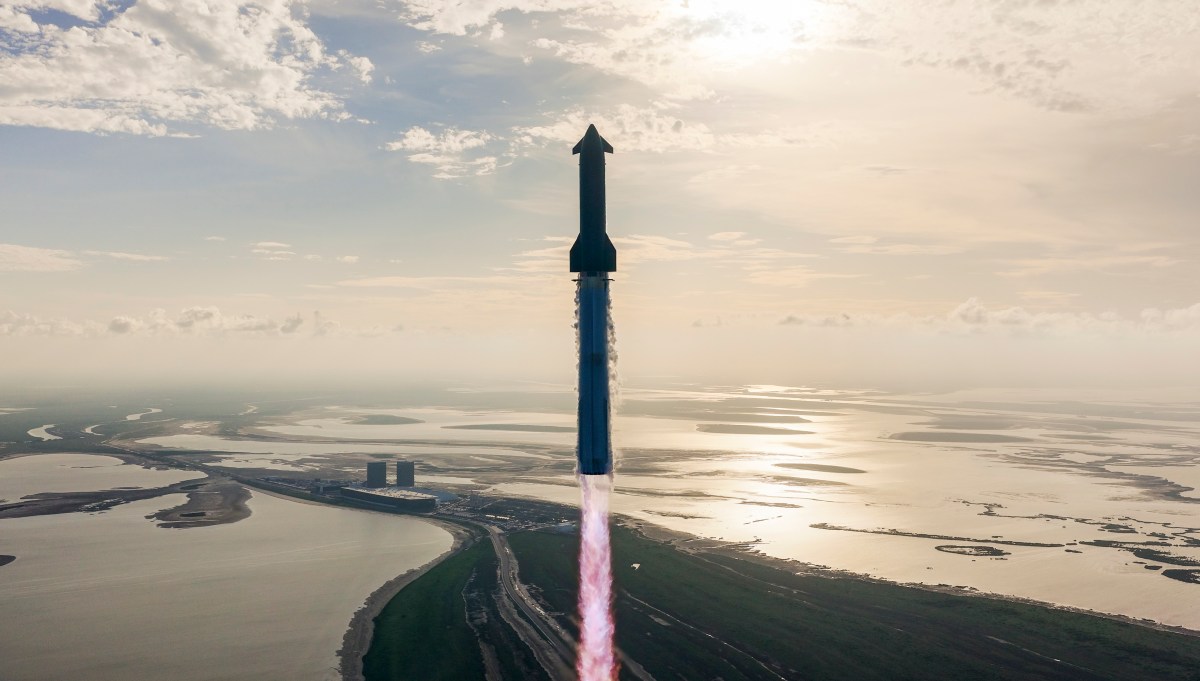

The delayed first test of SpaceX’s upgraded Starship rocket is now scheduled for mid-March, according to a publication from CEO Elon Musk on his social media site
This third version of Starship, or V3, is larger and more powerful. Crucially, the company plans to use Starship V3 to launch its next-generation Starlink satellites, which will be capable of faster data speeds but will weigh more and be larger. It’s also the first version of the rocket intended to dock with other starships in Earth orbit, a capability the company needs to reach the Moon or Mars.
All of this comes as SpaceX is. racing toward an IPO later this yearand under pressure from the Trump administration to return American astronauts to the surface of the moon before the end of his second term. Starship, the most powerful rocket ever developed, is currently a key part of NASA’s mission to meet that goal.
SpaceX was moving toward launching Starship V3 in late 2025. But in November, the booster stage suffered an explosion during tests that an entire side of the steel rocket exploded. The company said it was conducting “gas system pressure testing” when the explosion occurred, but has not yet offered a more detailed breakdown of what went wrong.
The company hoped to move on from the second version of Starship, which it was a mix. It was able to successfully reach orbit with Starship V2, deploy dummy versions of the next-generation Starlink satellites, and capture multiple booster stages after they returned to the launch pad.
But Starship V2 also suffered a series of explosions and setbacks of its own. Some of them emerged as a result of SpaceX’s development approach, which involves pushing test vehicles to (or beyond) their limits and then iterating based on what the company learns. Others were more unexpected, such as when one of the Starship vehicles atop the booster stage burst into a massive fireball during ground tests last June.
SpaceX has come to dominate the global launch market over the past decade and depends on Starship to maintain that dominance. But competition is lurking on the margins. Jeff Bezos’ space company, Blue Origin, launched its first megarocket, known as New Glenn, for the first time in January 2025 and again in November. The company launched its inaugural commercial payload for NASA on that second flight and also completed the first landing of its booster stage.
Blue Origin is planning a third New Glenn release at the end of February and hopes to send its own lunar lander to the moon some time later. While New Glenn is smaller than Starship, Blue Origin revealed late last year that is developing a larger version of the vehicle that competes most directly with SpaceX’s superheavy rocket.