
Tesla’s energy storage business prevented a dismal earnings report from turning into a horrible one.
Last year, the company’s profits fell 45% compared to 2024driven largely by declining sales of its electric vehicles. Investors anticipated falling sales, but Tesla still beat Wall Street’s earnings and revenue estimates thanks to its energy storage business.
Tesla deployed a record 46.7 gigawatt-hours of energy storage products in 2025, a 48% increase from last year, according to official company documents.
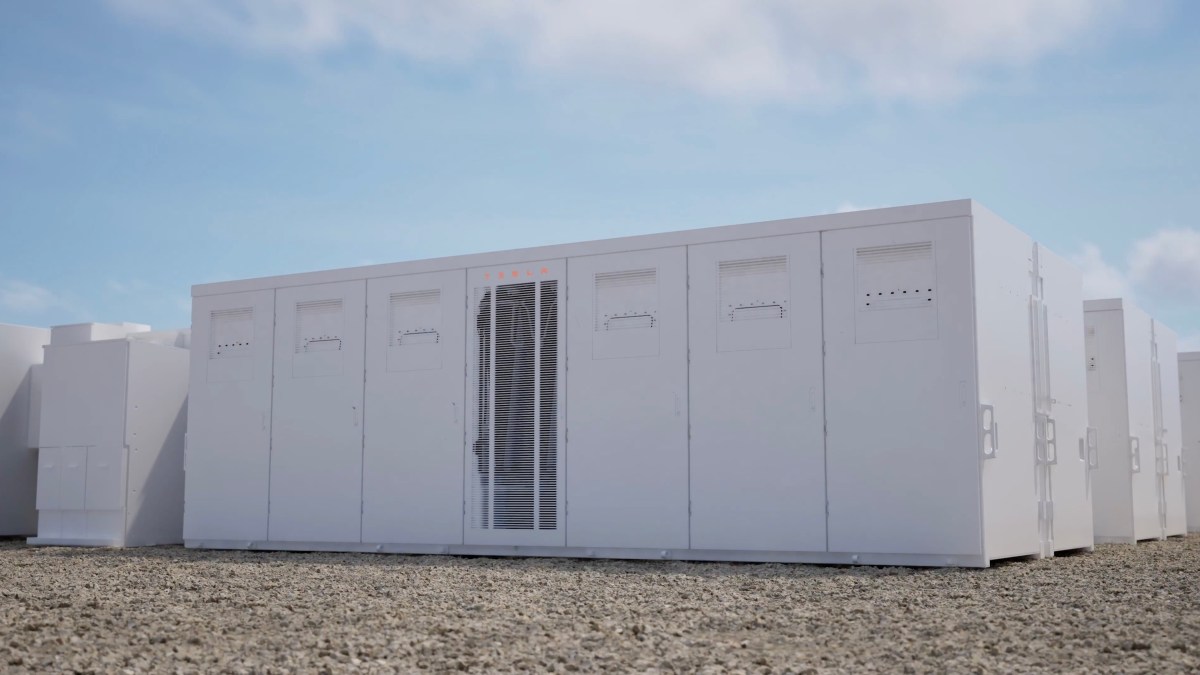
Large stationary batteries like Megapack and Powerwall, along with solar installations, now generate almost a quarter of Tesla’s gross profits. In the last quarter alone, Megapack contributed $1.1 billion of the storage business’ full-year gross profit of $3.8 billion. Revenue from energy storage and generation increased 26.5% to $12.8 billion.
Those batteries and solar panels are also very profitable, with a gross margin of 29.8%, almost double what Tesla makes selling cars and trucks.
Storage is also likely to play a larger role in the company’s near future.
Large energy storage projects, such as those installed for utilities or data centers, tend to be milestone-based and revenue from the projects is recognized when certain milestones are reached. In its 10-K filing with the SEC, Tesla said it expects to recognize $4.96 billion this year in deferred revenue from projects already underway. That’s more than double what the company recognized in deferred revenue from storage projects in 2025.
Technology crisis event
Boston, Massachusetts
|
June 23, 2026
However, there are still some obstacles ahead.
The One Big Beautiful Bill Act (OBBBA) phased out tax credits for residential energy storage systems like Powerwall, although commercial tax credits for Megapack and Megablock products will continue through the mid-2030s. OBBBA fees and provisions also threaten to drive up battery cell prices, the company said. Sales rose because volumes increased, but the average selling price of a Megapack fell, suggesting greater competition in the energy storage market.
Overall, however, Tesla remains bullish on the storage business.
“Despite these challenges, as AI infrastructure drives rapid load growth, we see opportunities for our energy storage products to stabilize the grid, transfer power when it is needed most, and provide additional power capacity,” the company said in its earnings report.