





Open interest in perpetual futures markets and on-chain trading patterns suggest some traders may have positioned themselves ahead of Robinhood’s cryptocurrency listing announcements, according to a Monday report from analytics provider Kaiko.
One of the clearest examples was the wallet address ‘0xa1E’, which Kaiko said opened a long position in Lighter (LIT) on the decentralized exchange Hyperliquid at 11:05 am UTC on January 15, about an hour before Robinhood announced the token’s listing at 12:12 pm. The wallet closed the position at 1:00 pm, shortly after the announcement.
Kaiko said the same management later opened a short position in a perpetual contract linked to HOOD on April 28, hours before Robinhood reported first-quarter revenue that missed analyst expectations. The trader closed the short that same day after HOOD dropped.
The trading patterns raise questions about whether some market participants had access to non-public trading information or had developed a reliable method of detecting public signals before the announcements. Kaiko also said that sophisticated traders may have been reacting to funding rate spikes, volume increases and changes in open interest rather than insider information.
Many other wallets made similar moves just before a quote was made public, raising the question of whether “more than one participant had access to the same information before the announcement,” wrote Laurens Fraussen, a research analyst at Kaiko.
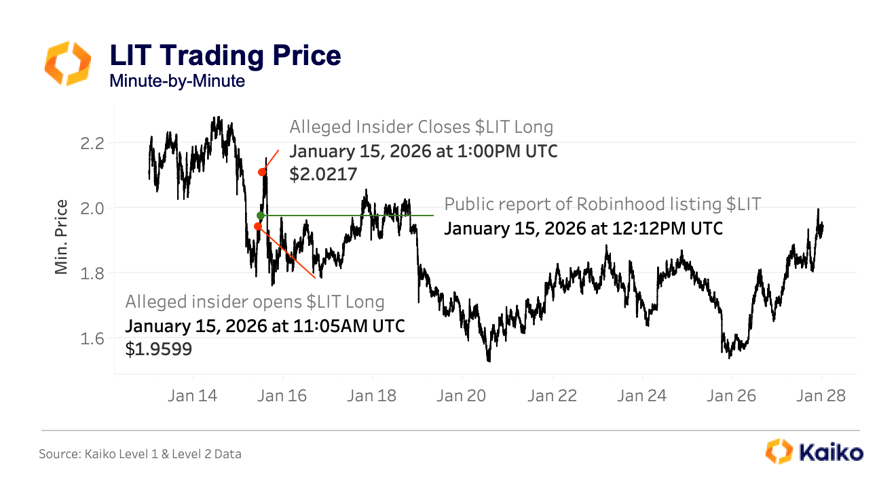
LIT trading price, quote time, minute by minute. Source: Kaiko
Hyperliquid data points to unusual pre-listing transactions
Kaiko pointed to multiple cryptocurrency listings that led to a spike in open interest and funding rates just before Robinhood’s public listing announcements, including Zcash (ZEC), Synthetix (SNX), and Near Protocol (NEAR) tokens, among other assets.
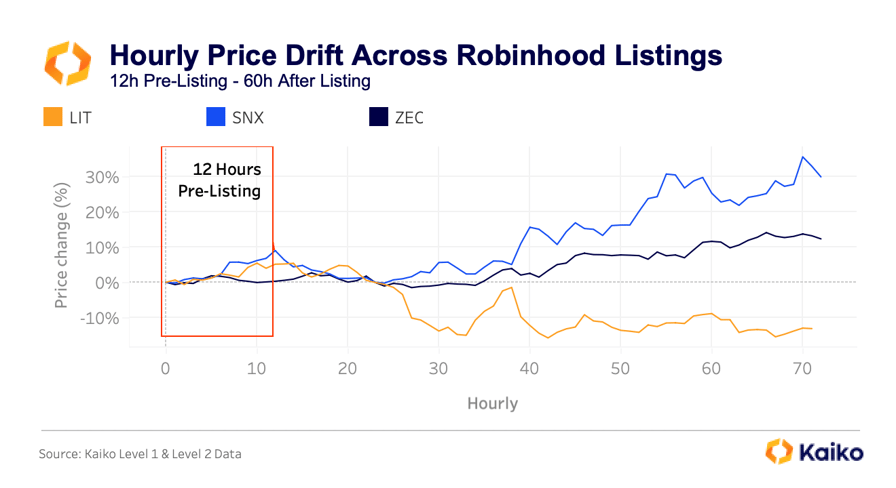
Hourly price movement ahead of Robinhood listing announcements for LIT, SNX, and ZEC. Source: Kaiko
All three tokens recorded price movement prior to the announcement, with each coin averaging abnormal returns in the hours before and after the listing announcement, the report explains.
Related: Crypto VC Funding Falls to $659M in April, Near Two-Year Low
While the data raises signs of possible insider activity, it may also indicate that some of the smarter traders are positioning based on funding or volume increases, Kaiko’s Fraussen told Cointelegraph.
“Traders who know how the microstructure works could have noticed funding spikes, rising volumes, and open interest spikes, and positioned themselves based on that.”
Still, derivatives metrics show that this type of positioning was statistically consistent and repeated across multiple asset listings, reflecting either “privileged access to Robinhood’s listing portfolio” or an “exceptionally reliable cutting-edge methodology based on public signals.”
Magazine: Bitcoiners Aim to ‘Sell in May’, SBF Offer for New Test Closed: Hodler’s Digest, April 26 – May 2


