



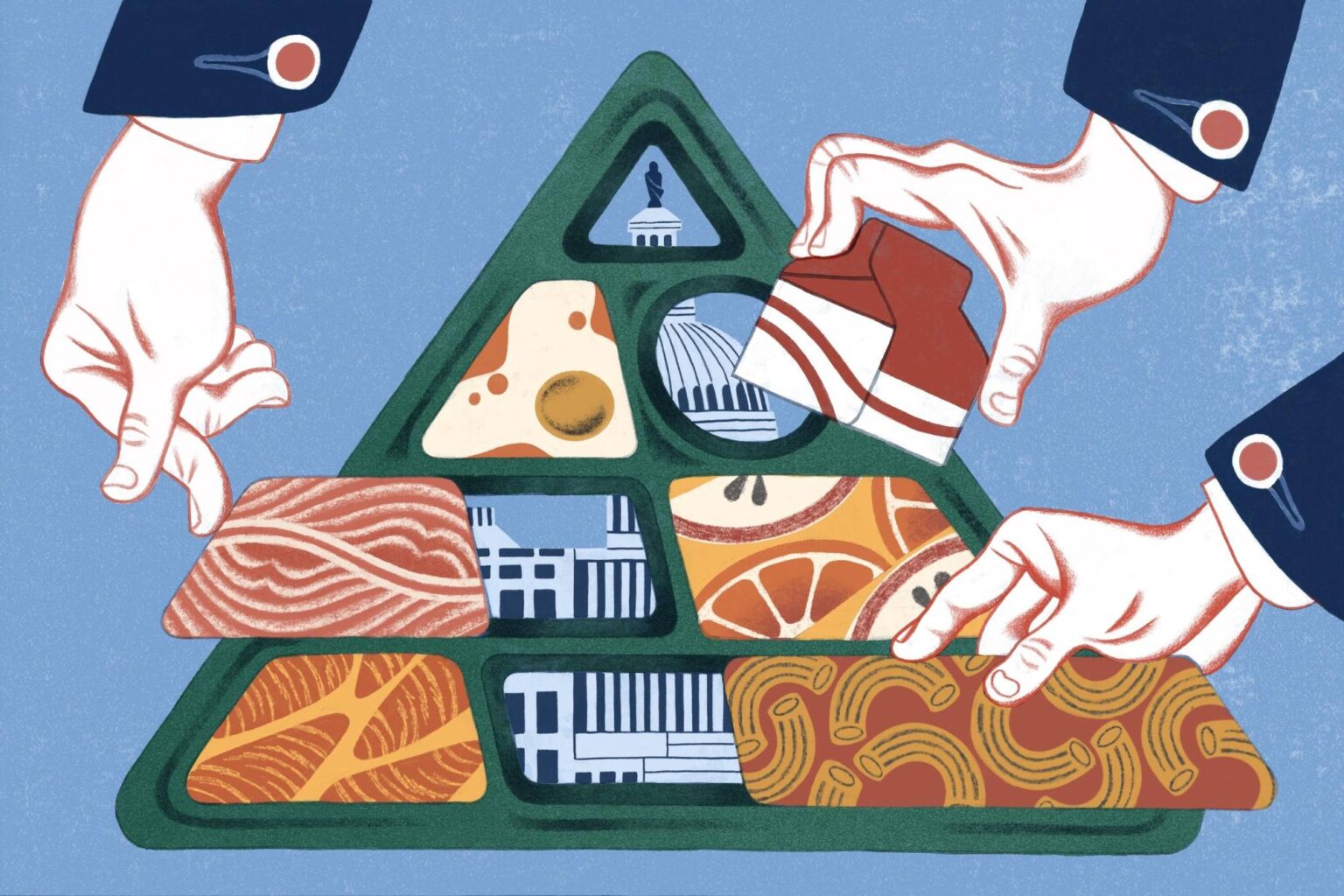

In early January, the Department of Health and Human Services and the USDA released new dietary guidelines for Americansalong with a new food pyramid.
The USDA sets school nutrition standards based on those dietary guidelines, which now emphasize protein and encourage Americans to consume full-fat dairy products and limit highly processed foods.
Here’s what you should know about how the new food pyramid could affect schools:
Reducing consumption of ready-to-eat school meals will not be easy
Highly processed, ready-to-eat foods often contain added sugars and salt. Think individually packaged macaroni and cheese, pizza, French fries, and peanut butter and jelly sandwiches.
These foods are also an important part of many school meals, Nelson said. This is because schools often lack adequate kitchen infrastructure to prepare meals from scratch.
“Many schools were built over 40 years ago and were built to reheat food. Therefore, they were not built as commercial kitchens,” Nelson said.
Still, schools have been able to reduce sodium and sugar levels in recent years.
“They have been working with food companies to find a middle ground, to find recipes that meet [the current] standards and appeal to students and that schools can serve given the equipment they have,” said Diane Pratt-Heavner, spokesperson for the School Nutrition Association.
Reducing sugar and salt levels further would likely require food companies to adapt their recipes and schools to prepare more meals from scratch, Pratt-Heavner said.
But leaning toward home cooking won’t be easy. A recent survey A survey of school nutrition directors by the School Nutrition Association found that most programs would need better equipment and infrastructure, as well as more trained staff, and nearly all respondents said they would also need more money. “You can’t go from serving highly processed foods, heating and serving to cooking right away,” Nelson said. “It’s a transition.”
School meals rich in protein will cost more
At the top of the new food pyramid are animal products such as meat and cheese. The new guidelines prioritize consuming protein as part of each meal and incorporating healthy fats.
“That could lead to a change in school breakfast standards,” Pratt-Heavner said. “At this time, there is no requirement that breakfasts include a protein.”
A typical school breakfast today might include fruit, milk, and a cup of cereal or a muffin; Some schools may serve breakfast burritos or sandwiches.
He said schools would “absolutely need more funding” if they were required to provide protein under the USDA School Breakfast Program.
Current standards allow schools to serve cereals or meats/meat substitutes for breakfast, and Pratt-Heavner said, “Protein options…are more expensive than cereal options.”
He said it’s unclear whether the USDA would require protein in its own category or whether the agency would consider milk sufficient to meet any new protein requirements.
Whole milk is getting a lot of attention
Schools participating in federal school feeding programs must offer milk with every meal, although students do not have to drink it. Until recently, a Obama-era government Only low-fat and fat-free milk is permitted in schools.
But the new food pyramid emphasizes full-fat dairy products, such as whole milk. At the same time, recent federal legislation reversed that Obama-era rule and now allows schools to serve whole and reduced-fat milk.
One more thing to know about milk: Federal law also limits saturated fat in school meals, and whole milk has more fat than low-fat and fat-free varieties. But recent federal legislation now exempts dairy fat from those limits.
What does all this mean for schools? Now they can start serving whole milk and won’t have to worry about whole milk putting them over the saturated fat limit.
It will be a while before these changes reach schools.
While the USDA sets regulations for schools based on the Dietary Guidelines for Americans, it takes time to write and implement new rules after the new guidelines are published.
“The current school nutrition standards under which we operate were proposed in February 2023 and finalized in April 2024,” Pratt-Heavner said. “The first menu changes in school cafeterias were not necessary until July 2025.” Other changes are still being implemented.
That is to say: the new dietary guidelines will not bring immediate changes to school cafeterias. They are just the first step in a regulatory process that will take time.
“We’ll have to see what the USDA proposes,” Pratt-Heavner said.
Then, he said, “the public will comment on those regulations and then the final rules will be drafted and published.”
The USDA then gives schools and school food companies time to update recipes and implement the new nutritional standards.

