



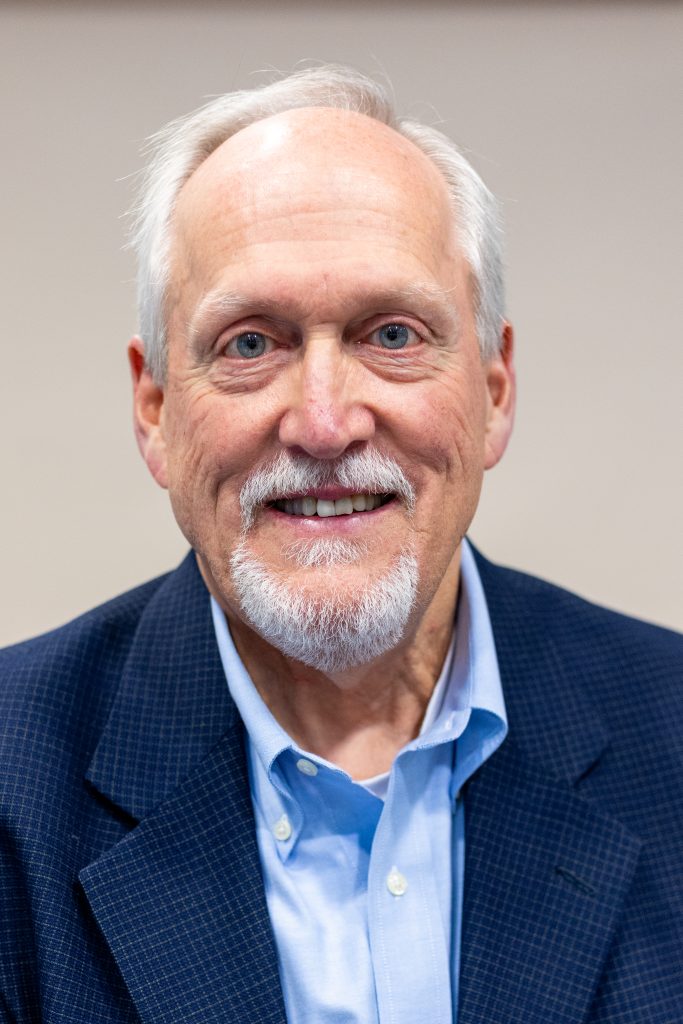


By GEORGE BEAUREGARD
From 2018 to 2022, I worked as a physician executive at a large health system on Long Island. During that period, I met the chancellor and executive vice president of the New York Institute of Technology. One of the university’s divisions is the New York College of Osteopathic Medicine (NYCOM), one of the largest schools of osteopathic medicine in the country. I saw an opportunity to give medical students a high-level introduction to “population health,” something not typically offered in medical school curricula and something they would undoubtedly have to deal with in some way as they completed their residencies and fellowships. With the support of the provost and dean of the medical school, I designed an elective course for fourth-year students at NYCOM called ‘Population Health 101,’ a four-week rotation through my Population Health Management division. The course was very popular with students and my staff enjoyed having students follow them.
More recently, the opportunity arose to return to NYIT and present at NYCOM’s ‘Reflections on Clinical Practice’ session, a bi-monthly assembly where patients share with students their experiences with healthcare systems. The CPR is not an academic conference. Its goal is to share the nuances of patients’ real experiences and perspectives in their interactions with the healthcare system. In doing so, NYCOM hopes to highlight the importance of a caring and empathetic physician and the aspects of healthcare delivery that are often overlooked.
After arriving, heading to the conference room, and familiarizing myself with how the technology worked, I watched the medical students enter from the back doors of the large auditorium.
Some wore short white coats that served as an indicator of their rank in the hierarchy of medicine. Many greeted their companions with smiles and warm hugs, suggesting they had not seen each other in a long time. They seemed young, energetic, relaxed and happy.
As someone who is more than forty years removed from my medical school days, I felt I needed to make a connection with this audience from the beginning. So my opening remarks were in line with the shared experience that is the first few years of medical school. Like mine in the mid-eighties, their lives are defined by volume. The volume of information. The volume of coffee. And the volume of sheer anxiety about whether they can completely memorize the entire Krebs cycle, the origin and insertion of every muscle in the human body, the bundle of His, the Purkinje fibers, the renin-angiotensin system, the optic chiasm, the corpus callosum, the loop of Henle, and the hypothalamic-pituitary-adrenal axis. Members of the section of the beautiful biological symphony that is the human body.
I pointed out that they were learning the vocabulary of medicine. And the vocabulary of survival. He as.
That openness seemed to resonate with the more than 600 students, as many of them nodded their heads in a way that suggested “Yes. This guy had to know these things too.”
And then I told them that I was also going to talk about WHO. I began with my story of being adopted at eighteen months and having no knowledge of my biological parents. And then about my adoptive parents, who never finished high school. About my adoptive father, who worked for the iconic automobile manufacturing company General Motors for 32 years and wanted me to do the same. But the science was already integrated and circulating in my brain, which led me to enroll in medical school at 28 years old. About my first two children being born while I was in medical school.
That, at age 49, with four children and a bustling medical practice, and feeling that life was good, I was diagnosed with late-stage cancer typically seen in septuagenarians. My wife and four children were in the sidecar on a trip that traversed the wastelands of systemic chemotherapy, major surgery and their aftermath. When I finished, I cautiously put on the mantle of survival. And I thought the Emperor of All Diseases was done with us.
It’s not like that. He visited our family again in 2017 when my son, then 29, was diagnosed with stage 4 CRC. The transition to a personal story that now included a person close in age to them seemed to increase his already rapt attention. The room became completely silent; A silent tension ran through the packed auditorium. The students shifted more in their seats, as if trying to find a more comfortable position.
I talked about Patrick’s shocking cancer discovery and his subsequent journey. I struggled to continue talking about how his life ended. That part of the story made people cry.
I also talked about Patrick’s medical oncologist. A doctor whose patient treatment contained presence, calm authority, experience, compassion and empathy. When she met Patrick, she didn’t look at her Apple Watch or her laptop; she looked at him. It offered partnership and hope. It made us feel that while the news was bad, we were not alone in the darkness. She was going to walk that path with him and with us.
I told them that that day I saw the positive power of their profession. But he had also seen others do the opposite.
I implored them to be like her.
I told them while everyone is smart, being present It’s what makes doctors healers.
That the laptop is not the patient, the person sitting on the examination table or in bed. Look them in the eyes. Listen first.
That they will be the narrators of someone’s worst day.
That they must carefully choose what they say and how they say it, since the words used will be forever recorded, rather etched, in the minds of their patients.
That every patient is part of a tribe that hopes (prays) that you are more than “just good” at your job.
That illnesses and diseases do not exist in a vacuum. They are contextual.
This technology cannot replace the doctor-patient relationship.
I told them I envied them, because their careers in medicine will include amazing tools never before used and yet to be imagined. In particular, the promise of discovery, artificial intelligence, precision and personalized medicine. And in other ways, I didn’t envy them, because long gone were the days when patients completely trusted medical professionals and passively accepted whatever advice they were given. Many of the people they will care for can easily access information that is not always accurate and will need help evaluating the reliability of the source, educating, clarifying, and encouraging critical thinking.
I finished by saying, “Society gives doctors an almost miraculous level of trust that is not given to other professions. They assume that you are good, that you care, and that you will do the best you can. Live that trust by being more than smart: be observant, humble, and, above all, be present. Treat the illness if you can, but treat the person always, since they are the ones who have to live with the consequences of the treatment. It is a heavy, scary, and beautiful privilege. Try to be up to date. height. I’m sure he will.”
After a question and answer session, many students approached me. Some seemed a little nervous. They asked thoughtful questions. Many of them burst into tears as we spoke, as their lives had also been affected by cancer. Surprisingly, some were familiar with the motto ‘Pray, Hope and Don’t Worry’ that appeared on a couple of slides that provided the backdrop for my talk. The motto, coined by the Italian monk and saint Padre Pio, was adopted by my son as inspiration throughout his treatment. One student said she remembers it every time she takes a test.
They asked me what it was like to be a doctor and the father of a child with cancer, to which I responded: I was always his father first; the role of the consulting physician came second.
They asked me how I dealt with my anger at God for what I was going through. I told them that near the end of Patrick’s life, a nun brought an almost supernaturally powerful sense of love and support to him and our family, showing me how to see tragedy and pain through a different lens and restoring what little faith I had left. Without it, anger probably would have consumed me.
They thanked me for my willingness to share my stories and my love.
I thanked them for being present.
There are moments when you simply know that you have left an imprint on others. This was one of them; However, in truth, it was I who came out the most changed.
I admit that forty years in the trenches of American healthcare—first navigating its multiplicity of clinical care demands and now its verticalization, burgeoning bureaucracies, and relentless corporatization—have left me with a layer of professional scar tissue. I have become cynical.
But as I watched those students, with their cloudy eyes, compassion, empathy, and some with ‘Pray, Wait, and Don’t Worry’ talismans, I felt some of that cynicism dissolve. His empathy wasn’t just a trait; It was the antidote to the same system that threatens to hollow us out. I left that auditorium less worried about the future of the profession.
Now they are the narrators and the story is in good hands.
George Beauregard, DO is an internal medicine physician and author of Reservations for nine: a doctor’s family faces cancer. This came from his Substack


