
This article is published as part of the global journalism collaboration Covering Climate Now.
Good news about climate change? It’s hard to believe, but yes. It happened last week in the coal-exporting city of Saint MarthaColombia, and ranks as the most promising climate news since the Paris Agreement was signed in 2015.
For the first time, a critical mass of the global economy is working together to phase out fossil fuels, a step that scientists have long said is imperative to limit global temperature rise to a level that civilization can survive. This is good news, not least because it shows that significant change is possible, a belief that has been difficult to maintain over the last decade. Equally important is what made the Santa Marta breakthrough possible: Advocates for phasing out fossil fuels stopped waiting for fossil fuel producers to agree to stop. Instead, advocates will simply stop buying their products.
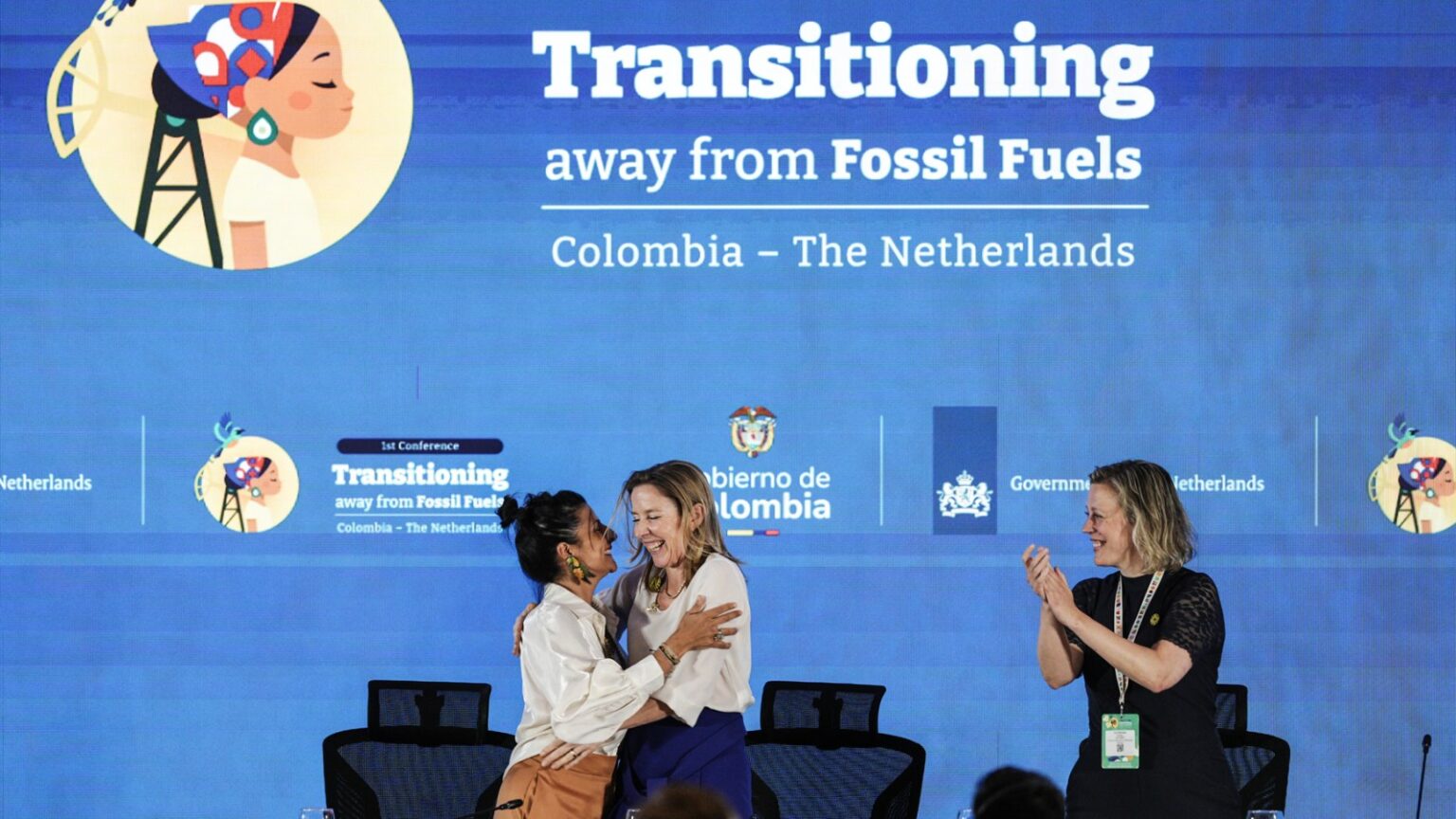
From April 24 to 29, 57 countries representing most of the largest economies on the planet met in Santa Marta for the First conference on the transition to fossil fuelswhere they pledged to phase out the burning of oil, gas and coal, the main driver of global warming. The phase-out will not happen overnight, but over the immediate years. France, for example, says it will eliminate coal by 2027, oil by 2045 and gas by 2050. Each country will design a voluntary national plan to “disentangle their economies and societies” from fossil fuels, said Stientje van Veldhoven, environment and housing minister of the Netherlands, which co-sponsored the conference with Colombia.
These 57 countries, which call themselves “a coalition of the willing,” (including Germany, the United Kingdom, France, Italy, Brazil, Canada and Spain, joined by California, the world’s fifth largest economy) make up the largest economic bloc on Earth. Their combined gross domestic product of $38.5 trillion (as of April 2026) dates of the International Monetary Fund) is greater than the GDP of the United States (32.4 trillion dollars) and almost double that of China (20.9 trillion dollars).
These countries also account for approximately 30 percent of current global fossil fuel consumption. If they follow through on their promises to phase out fossil fuels, demand for those fuels will be reduced. A basic law of economics is that lower demand leads to lower prices. (Right now, the world is experiencing the flip side of this law, as oil and gas prices soar due to supply constraints in the Strait of Hormuz.) Lower fossil fuel prices mean lower revenues for fossil fuel producers, which could prove fatal to the profitability of many current and planned projects and infrastructure.
The Santa Marta conference benefited from an unexpected coincidence: the war in Iran has triggered a historic energy crisis that is causing countries to lose faith in the reliability and affordability of oil and gas. On the second day of the conference, the head of the International Energy Agency declared that the war had destroyed world energy markets beyond repair. “The damage has already been done,” said Fatih Birol. an interview with the guardian. Predicting “permanent consequences” for the fossil fuel industry, Birol said countries will increasingly turn to safer and less expensive renewable energy sources, including switching to electricity to power transportation and other sectors that historically relied on fossil fuels.
Irene Vélez Torres, Colombia’s Environment Minister, welcomed Birol’s comments. “Our energy sovereignty, as well as our climate survival, requires moving to other energy sources,” he said in an interview.
To be sure, the transition away from fossil fuels promised in Santa Marta has not yet occurred, and there is a lot of space between the lip and the cup. But the economic weight of the Santa Marta coalition of the willing is undeniable, and its most important members (Germany, California, the United Kingdom and France) have already made significant progress toward a future powered by non-fossil fuels. In fact, one of the central objectives of the Santa Marta conference was for participants to share lessons with each other on the best way to leave fossil fuels behind. “This conference is not about [negotiating] “It’s about finding fellow travelers and learning from them: what works and what doesn’t?” said Rachel Kyte, the UK’s special representative for climate.
The fact that the Santa Marta conference has received little news coverage in the United States and that its greatest power lies in the economic rather than political sphere may help explain why many observers have not yet recognized its transformative potential. From the moment climate change first appeared on the global agenda with the United Nations “Earth Summit” in 1992, the dominant narrative has measured progress through the lens of politics: how many governments sign legally binding agreements to limit global temperature rise, and to what extent? This prioritization of politics is not surprising: most of the people involved in these negotiations – the diplomats who conduct them, the scientists and activists who seek to influence them, the journalists who cover them – consider governments to be the decisive actors in international affairs and have little or no training in economics.
This approach has produced little progress. With the important exception of the Paris Agreement, where virtually every country in the world agreed to limit temperature rise to “well below” 2 degrees Celsius and aim for 1.5 degrees, the annual UN climate summits have been long on talk and short on action. Most of their elaborate negotiated agreements do not even mention the words “fossil fuels,” although phasing them out is the main challenge.
The UN process has fallen short largely because a loophole gives fossil fuel-producing countries a de facto veto over final agreements. UN summits are held under UN rules, which require consensus decision-making. “Consensus” does not mean “unanimous,” but it does mean that a handful of countries can block what a large majority wants. That’s what happened at last November’s COP30 summit, when Saudi Arabia led a group of petrostates that blocked a call by 85 countries to begin drawing up a global roadmap to phase out fossil fuels.
The organizers of the Santa Marta conference circumvented these obstacles by operating separately from the UN process and inviting only participants who had demonstrated a genuine commitment to moving beyond fossil fuels. That meant there was no United States or China. Discussions did not veer into debating whether fossil fuels need to be phased out, but rather could focus on how to achieve this, and do so while protecting the workers, businesses and communities that currently rely on fossil fuels for jobs, profits and tax revenue.
Santa Marta is just a first step. In a world where fossil fuels account for approximately 80 percent of total energy use, moving away from them is no easy task, as the Netherlands itself illustrates. The same week it co-sponsored the Santa Marta conference, the Dutch government approved plans to increase marine gas production. When asked about this contradiction, Minister van Veldhoven explained that supply disruptions caused by the Iran war meant that in the short term the Netherlands could get the gas its residents and businesses need only by producing it or buying it from Russia, and the latter option was worse for both energy security and climate reasons. This conundrum, he added, “illustrates the very difficult problems that we and all countries face as we try to free ourselves from dependence on fossil fuels.”
Very difficult, yes. But for the first time in a long time, Santa Marta offers plausible hope that humanity can phase out fossil fuels in time to avoid catastrophe. A critical mass of leaders are no longer waiting for countries that make money and wield power through fossil fuel production to agree to stop doing so, something they clearly have no intention of doing. Instead, those leaders are responding to the fact that the overwhelming majority of the world’s population… 80 to 89 percent Of them, according to peer-reviewed scientific studies, want their governments to take stronger climate action. “This is not the end,” Vélez said in the final moments of the conference. “It is the beginning of a new global climate democracy.”
Author and journalist Mark Hertsgaard is environmental correspondent for The Nation and executive director of Covering Climate Now.