
If there’s one part of a home that homeowners and investors often overlook, it’s the backyard. This may be an ideal location for secondary living space, allowing you to generate income and improve resale value without purchasing additional land.
Commonly known as accessory dwelling units, these additional living spaces are gaining popularity as the demand for housing continues to increase. Here’s how to make the most of these rentals.
What is an accessory dwelling unit?
A accessory dwelling unit (ADU) is a smaller housing option built on the same lot as a single-family home. You may hear many different names to describe them, such as granny flats, backyard cabins, secondary suites, and accessory apartments. They usually have their own entrance, living room, sleeping area, bathroom and kitchen.
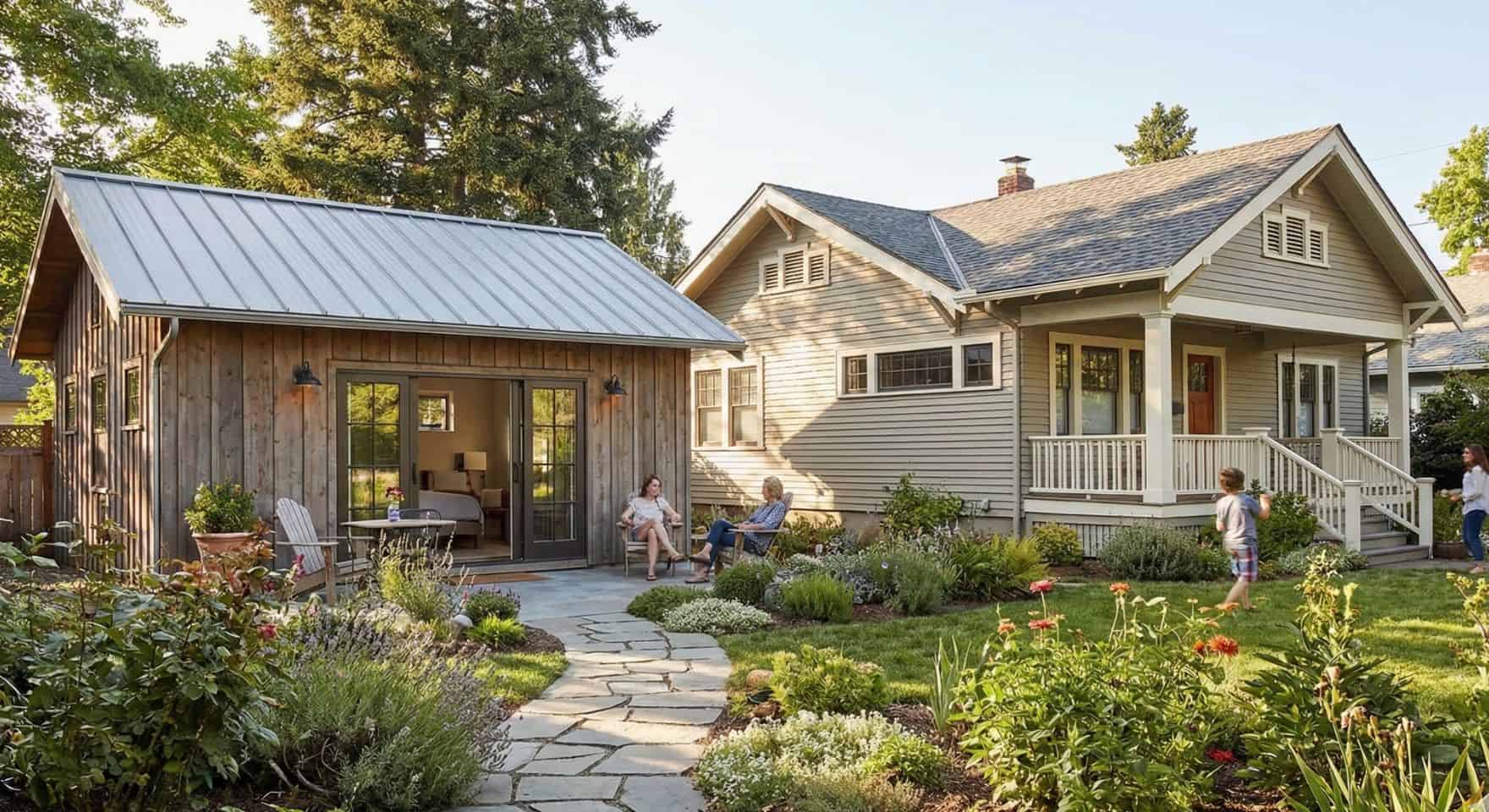
Although ADUs are often associated with the backyard, they don’t always have to be located there. Different types of ADUs include:
- Freestanding ADUs: A fully detached, free-standing structure, such as a detached backyard unit.
- Internal ADUs: Part of an existing home, such as a basement or garage, that is converted into a separate living space.
- Attached ADUs: A new addition to the main house, as a side extension with its own entrance.
There are currently at least 1.6 million ADUs in the United States. Their popularity is likely due to the benefits they provide to homeowners. They can accommodate a family member for multi-generational living, offer additional space, serve as a guest suite, or provide a source of passive income. For many homeowners facing higher taxes and mortgage rates, having these secondary spaces they can rent out is a huge financial help.
RELATED: Home Hacking: The Official Guide on How to Live (Almost) Mortgage-Free
How can you generate passive income with an ADU?
You can use ADU for a wide range of things. If you work remotely, you can use it as a separate home office. Alternatively, a family member can move out. It is a great way for older parents who want to live close to their children while maintaining their independence.
ADUs also provide a way for people to generate passive income by renting them out. As with other real estate investments, the financial potential depends on your location, the layout of the unit, and the type of rental you choose.
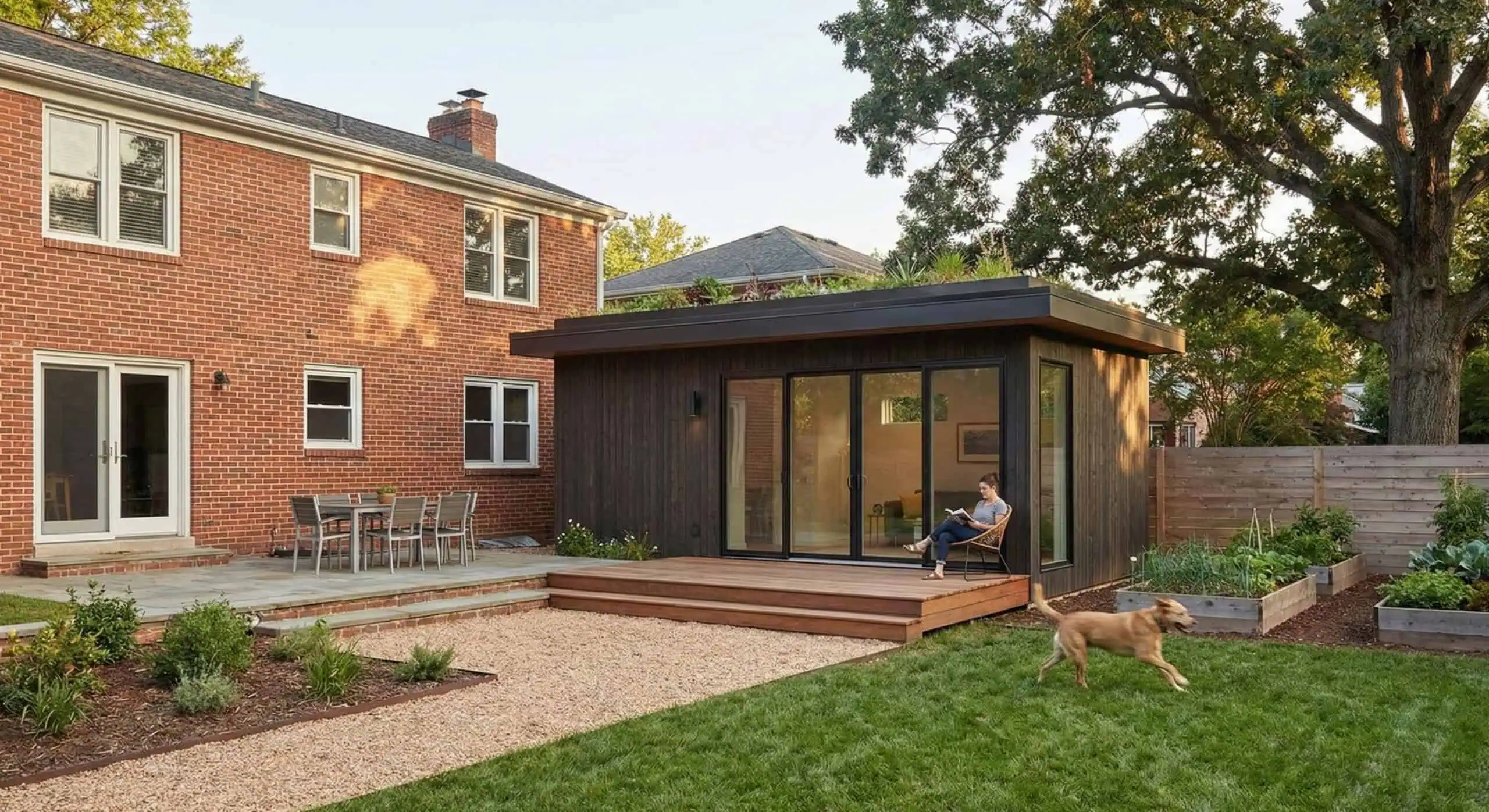
Long-term rentals provide stable occupancy and predictable monthly payments. Due to the shortage of properties for sale, there is a growing demand for small one-bedroom or studio-style homes. Therefore, ADUs are attractive to students, young professionals, and downsizers.
Short term rentals can offer higher monthly income, especially if your property is located in areas with tourist or seasonal demand. The challenge is additional management. You may need help with housekeeping, communication with guests, and a way to manage reservations. It’s also important to check local rules in this case, as some cities limit this option.
The type of ADU you plan to build can also influence your income. Freestanding ADUs, like a cabin at the back of your house, tend to offer the most value as they offer more privacy.
Thanks to the rental income it offers, a legally permitted ADU can also increase the value of your property. Even if you plan to sell later, the presence of a rental-ready unit attracts buyers looking for consistent returns from day one.
How should you plan your ADU project?
The difference between a unit that performs well for years and one that struggles to stay busy is good planning. Here’s how you can plan your ADU project.
Know the rules and regulations
Start by familiarizing yourself with the rules and regulations. Many US states support ADUs because, unlike apartment blocks, they add housing options to a neighborhood without changing its characteristics. Some states, such as Vermont and California, have passed laws allow their cities and towns to be more lenient with these additional units. While it is generally not necessary to obtain a special permit, you may need to follow local regulations. Some common ones are:
- As a homeowner, you may be required to live in the main house or secondary space.
- There may be requirements regarding the size, height, and layout of the unit to ensure it fits in with the rest of the neighborhood.
- There should be a dedicated parking space for the ADU.
- There may be rules about how big your lot must be, how many bedrooms the secondary space can have, and how many people live in it.
- There is a limit on the number of ADUs you can have on a lot. Some states, such as Washington, allow you to build up to two ADUs per residential lot.
Regulations vary widely by municipality and state. Some are stricter than others, but the effort is often worth it, as a well-planned unit offers a dependable way to increase both income and property value.
Build Your ADU Carefully
Once you know the rules, it’s time to build your ADU. For many renters, these units are known to be uninhabitable because they are not well built or renovated. A good unit should offer privacy and be easy to live in. Be sure to research the rental preferences that tenants value. In general, it may include the following:
- A functional kitchen with good storage.
- A comfortable bathroom
- Acoustic insulation
- natural light
If you already have a structure, such as a garage, a renovation may be a quicker and cheaper option. Converting a space you already have can be just as good as building a new one if you plan it well. One of the most important things to consider is the design. It should be functional and livable, so leave enough space for a kitchen, sleeping area and bathroom.
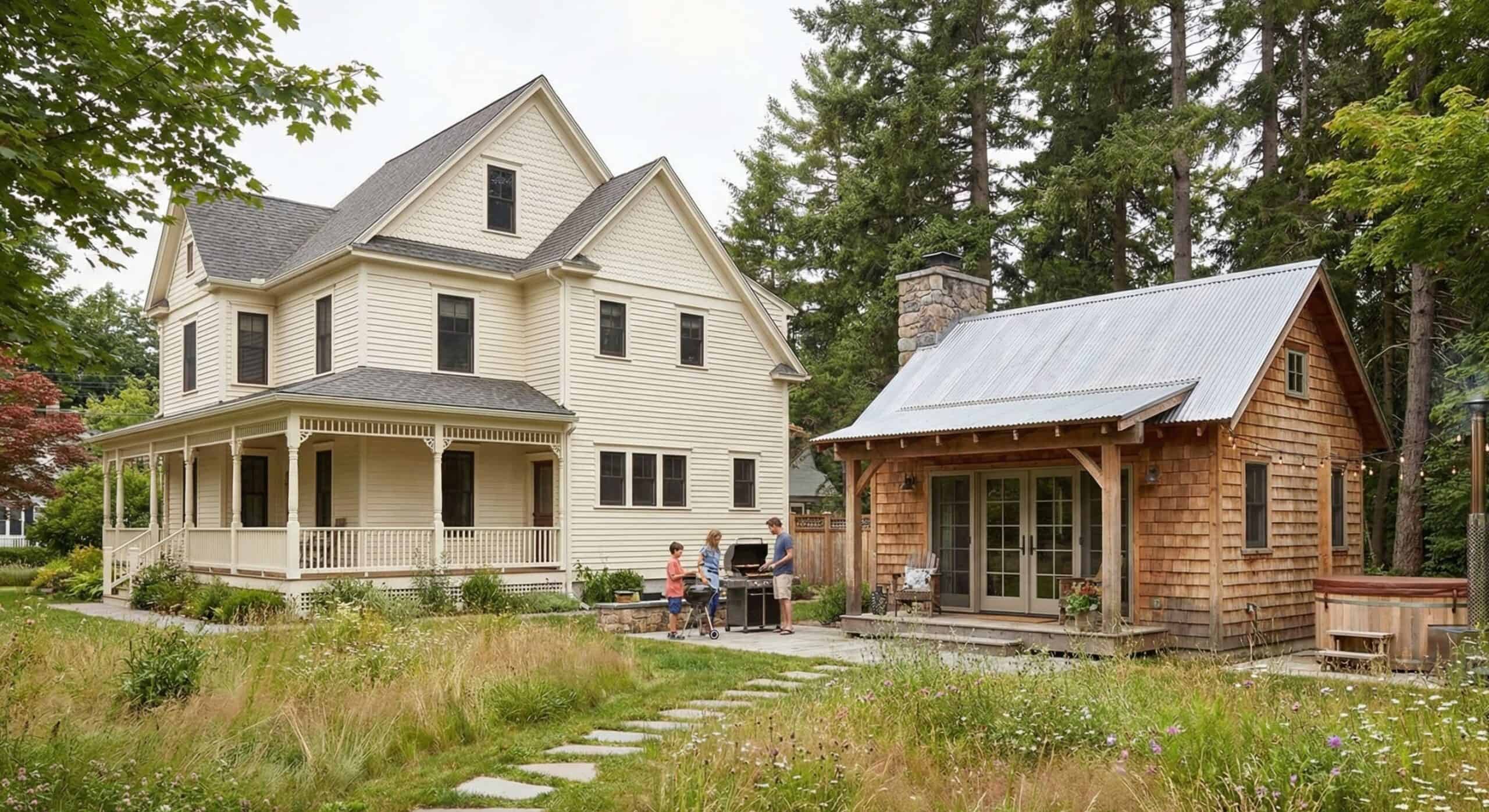
The design is equally important. Painting both the exterior and interior of your ADU can improve its marketability and generate a 107% return on investment, meaning it’s a simple upgrade that pays for itself. A good rule of thumb is to opt for a neutral palette that is both timeless and modern. If you want to play with optics to change the way you perceive the interior dimensions of your granny flat, check out our guide to using the wall. painting to change the size of the room.
Renters also prefer apartments that feel clean and modern. Therefore, select materials that offer durability and style, such as vinyl planks and laminated wood.
It’s also a good idea to improve long-term insulation and add energy-saving features, as lower utility costs can make the space more attractive to tenants.
How can the project be financed?
Renovating or building an ADU is not cheap. The cost may depend on the type of unit, the size, and the amenities you want to include. The good news is that there are several options available.
Some of the most common financing options include:
In addition to these options, you can explore local grants or seek fee reductions. Several states have state-level grant programs, including California, Vermont, and New York. In Vermont, grants of up to $50,000 per unit are available, while New York offers up to $125,000 for qualified homeowners. Other US cities with ADU incentive programs include Portland, Boston, Santa Cruz, Austin, Montpelier, among others.
RELATED: Beyond Traditional Financing: Creative Financing Options for Land Lovers
Tips for a successful ADU
Follow these steps to ensure you build an ADU that meets your needs and all local requirements.
Estimate the budget
When creating your budget, remember to include permits, utility improvements, site preparation, landscaping, and furnishings for rental use. Property insurance is also essential. Notify your insurer before building one. In some cases, your ADU may be covered by your existing policy or you will need to add a new one.
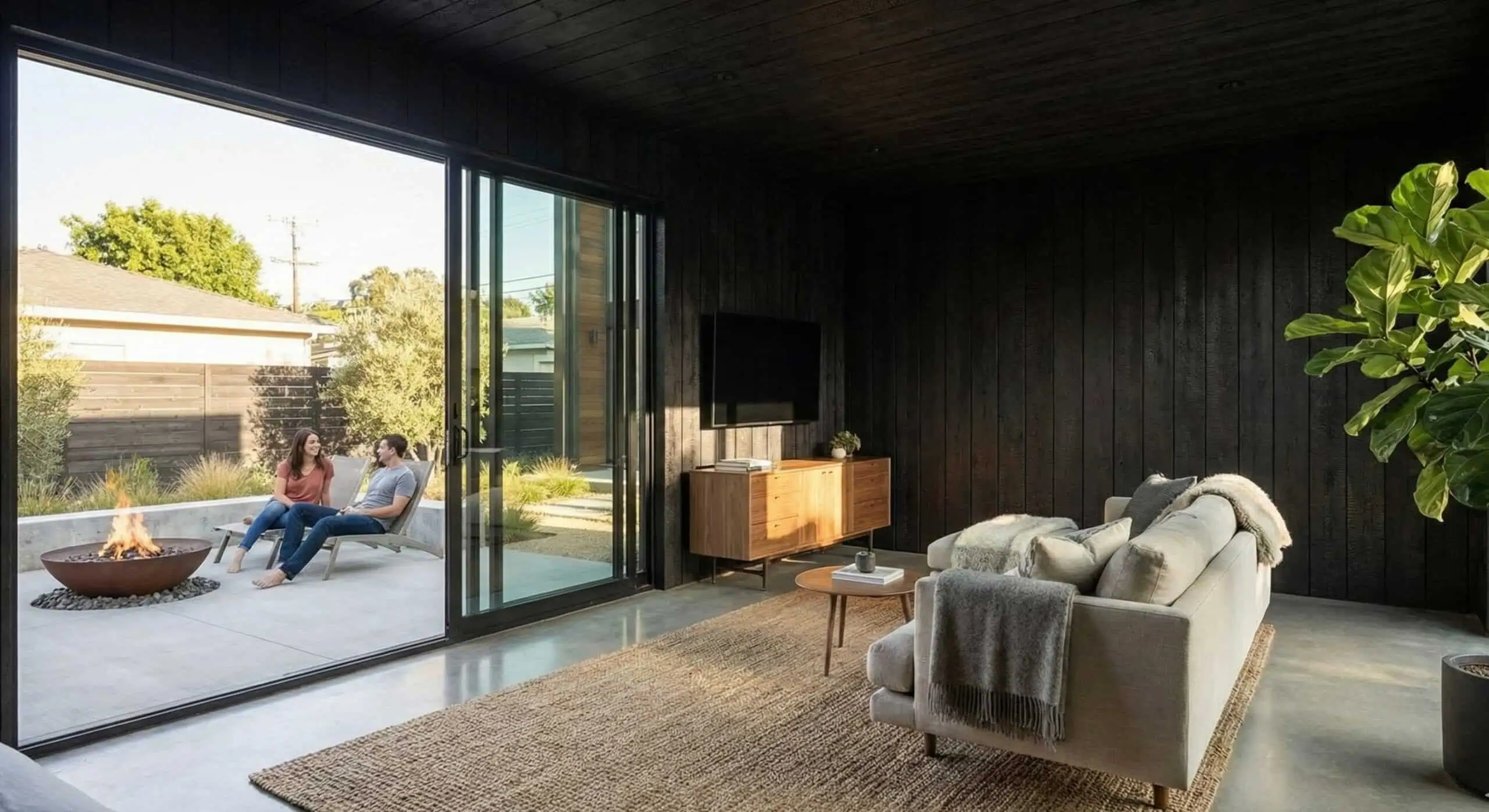
Set the right price
It is essential to set a competitive price to attract potential tenants. Pricing your ADU requires research and understanding of the local market. Find out the average rental price of similar properties in your area and consider factors like size and amenities.
Use quality materials and keep it simple
Always use quality materials to reduce long-term maintenance costs. Durable flooring, moisture-resistant surfaces, and strong insulation stand up to daily wear and tear much better than cheaper alternatives. Also, keep your ADU simple. Most tenants prefer a space that functions well to one that is too stylized and difficult to maintain.
Add value for tenants
You can offer benefits that make your ADU more attractive to potential tenants. A fully furnished unit often attracts more interest, and offering a pet-friendly policy can do the same. Both features can justify a higher rent because they add clear value.
Build your ADU and generate income
A well-built ADU is a fantastic investment option. With careful planning and financing, it can help you generate passive income, increase the value of your property, and provide flexible space that supports your changing needs.
 Peter Chambers is an associate editor at Renovated, where he offers practical advice to new homebuyers to help them make the most of their investment. Their experience helps them navigate the complexities of the market and generate long-term wealth.