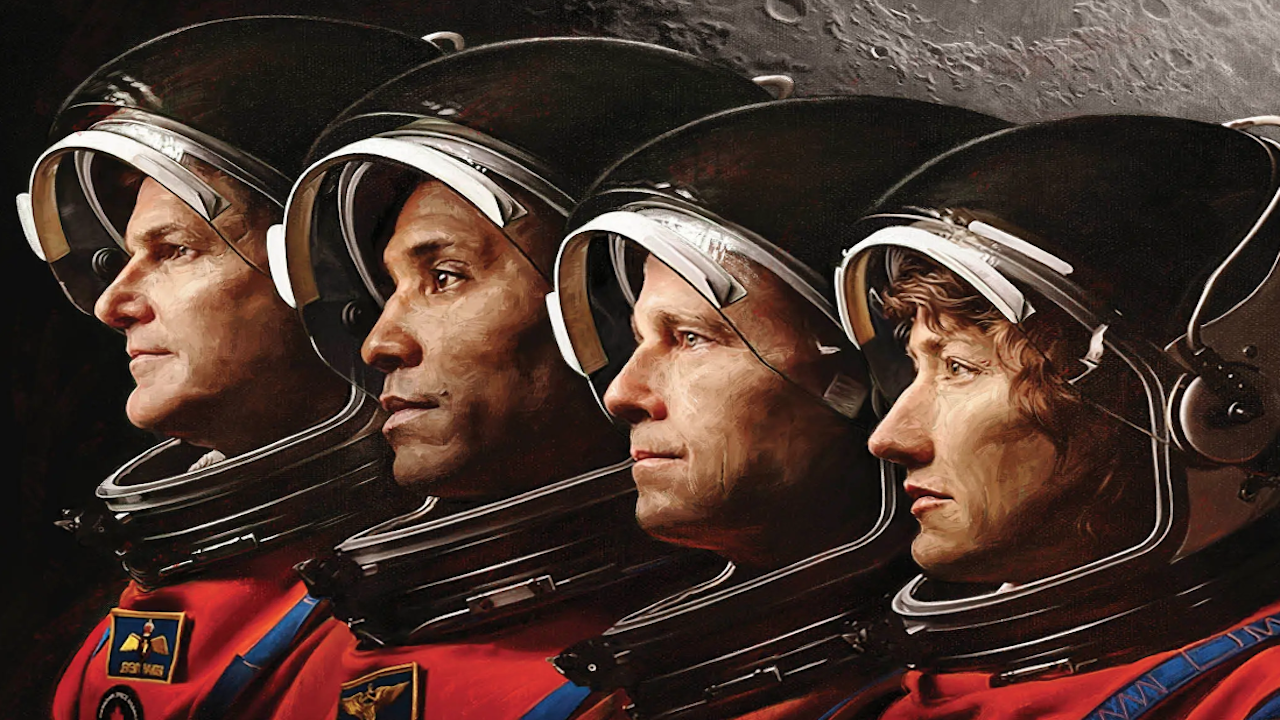

Located at Kennedy Space Center’s Launch Pad 39B, NASA’s Artemis 2 SLS rocket is ready to propel into the skies beginning February 8, for a 10-day lunar flyby mission carrying astronauts Reid Wiseman, Jeremy Hansen, Victor Glover and Christina Koch in their Orion spacecraft.
As the world holds its collective breath and awaits humanity’s return to the moon After more than half a century of an unprecedented lunar journey, Time magazine celebrates this momentous event with a special Artemis 2 Cover issue that hit newsstands on Friday (January 30).

The main feature of Kluger’s Artemis 2, titled “Back to the Moon,” offers compelling context and provides contrasts and comparisons with Apollo 8. That 1968 NASA mission was the first manned flight to orbit the Moon and return safely, and it helped pave the way for Apollo 11of the moon landing in July 1969. The importance of that first flight beyond Earth’s orbit cannot be underestimated, since the fate of the entire program depended on the success of its crew of Jim LovellFrank Boorman and William Anders.
The official trajectory of Artemis 2 will push humans 7,560 kilometers (4,700 miles) beyond the far side of the moon. This will be farther than our species has ever traveled, breaking the old record of 158 miles (254 km) beyond the Moon, held by the Apollo 13 astronauts during that ill-fated 1970 flight.
“58 years after Apollo 8’s historic trip around the Moon, NASA is returning,” NASA Administrator Jared Isaacman wrote Friday. publish in X which featured side-by-side Time magazine covers from 1968 and 2026. “This time, our crew will go further into space than any human being in history.”
“Artemis 2 marks the beginning of the most audacious series of missions the world has ever seen,” he added. “Through the Sagebrush campaign, we will maintain American superiority in space, land American astronauts on the moon, and establish a lunar base, all before the end of 2028.”

As Jeffrey Kluger summarizes in Time magazine’s new cover story, the launch of Artemis 2 can also be experienced as an uplifting and unifying moment in a tumultuous time when it is needed most, something it would have in common with Apollo 8.
“A return to the lunar neighborhood will not only represent a significant, if temporary, advantage in any space race that does exist with China, but it also offers a kind of public elevation that, since the 1960s, spaceflight has been uniquely able to provide,” he writes. “Not all missions, of course, touch the collective soul, but some do: John Glenn’s three orbits of the Earth in 1962; The Christmas Eve lyricism of Apollo 8; The Apollo 11 moon landing; The tiny rescue of Apollo 13 was less American experiences than global dramas, global triumphs, and global joys.
“With Artemis 2, the lunar book will finally be reopened and four more names will be inscribed: a fine, fit crew who will be sent into the cosmic depths as emissaries for the 8.3 billion of us who will remain forever on Earth. Apollo 8 saved 1968. Artemis 2 can perform similar magic today.”