



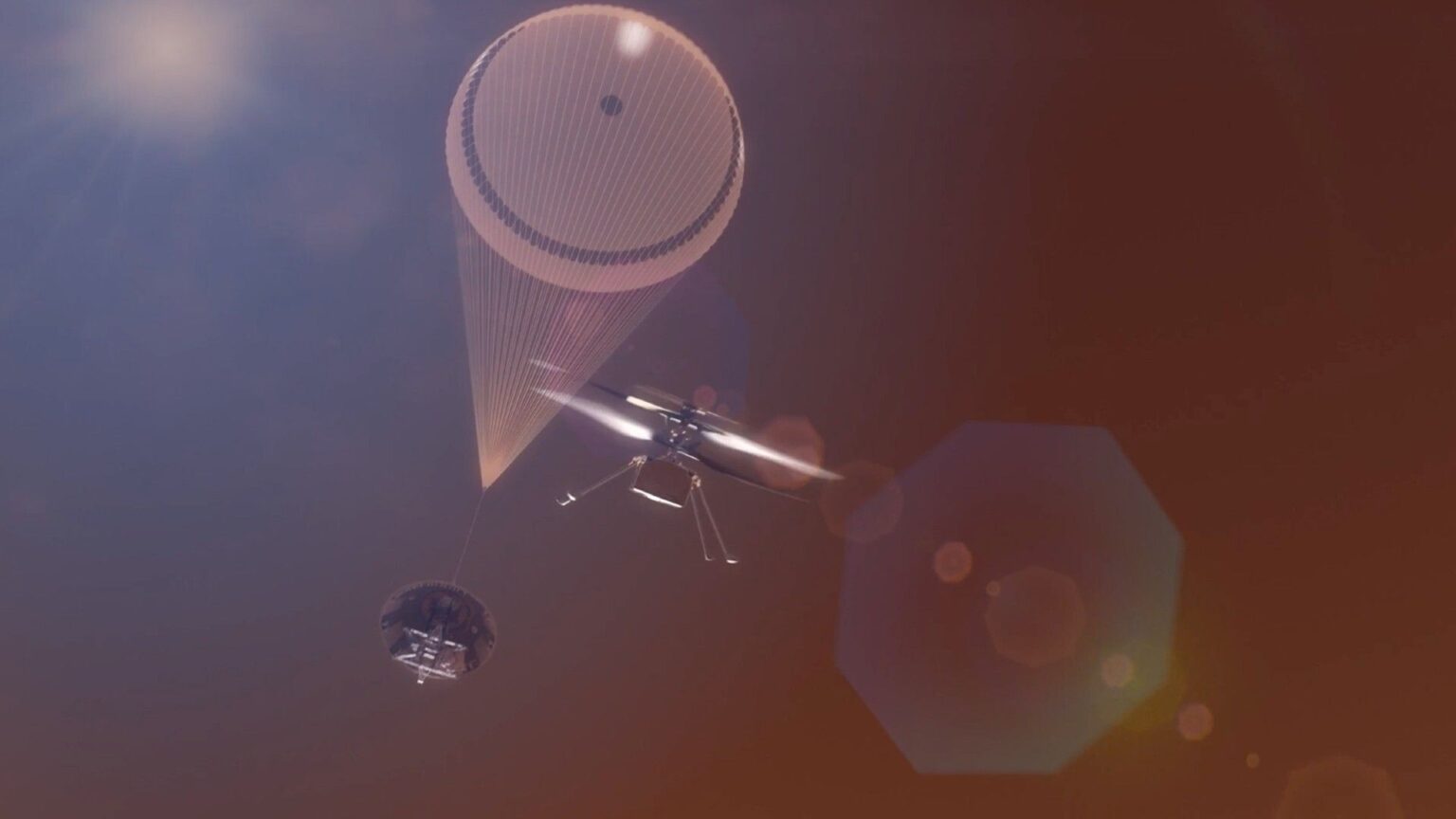

NASA is testing the limits of future Mars aircraft as it works to develop a fleet of next-generation helicopters that will fly through the Red Planet’s thin atmosphere.

The first aerodynamic flight in Mars It was carried out on April 19, 2021 by NASA Ingenuity helicoptera prototype designed to determine whether a helicopter could be effective in such a thin atmosphere. The small helicopter far exceeded the expectations of those responsible for the mission and completed a total of 72 flights over the course of almost three years.
Ingenuity wasn’t built to function as a full science rover, but NASA’s upcoming Mars helicopters are being designed to do just that. “NASA had a great performance with the Ingenuity Mars helicopter,” Al Chen, manager of JPL’s Mars Exploration Program, said in a statement. JPL statement of May 7. “But we’re asking these next-generation aircraft to do even more on the Red Planet.”
The JPL teams mounted a three-blade rotor inside the modified chamber, which also flew the blades in wind to simulate flight conditions. They spun the rotor at increasing speeds until its tips finally reached Mach 1.08 with no signs of damage.
Engineers also tested a longer two-blade rotor to fall from the skya mission concept designed to send three next-generation Martian helicopters to the Red Planet in December 2028. The increased length of the two-bladed version allowed the rotor to reach the same near-supersonic speeds with fewer rotations per minute. Those tests collected data that is being integrated into the SkyFall mission team’s design specifications, according to the same statement.
“Successful testing of these rotors was an important step in demonstrating the feasibility of flight in more demanding environments, which is key for next-generation vehicles,” Shannah Withrow-Maser, an aerodynamicist at NASA Ames Research Center in Silicon Valley, said in the statement.
The successful tests point toward a new class of Mars rover, capable of carrying instruments over terrain that rovers may have difficulty reaching and orbiters may be too far away to study.


