
President Donald Trump said on June 11 that he’s willing to extend a July 8 deadline for concluding trade negotiations with other countries before sweeping new tariffs take effect.
He also said that such an extension may prove unnecessary, as deals are either coming or will be replaced by unilateral terms set by the United States.
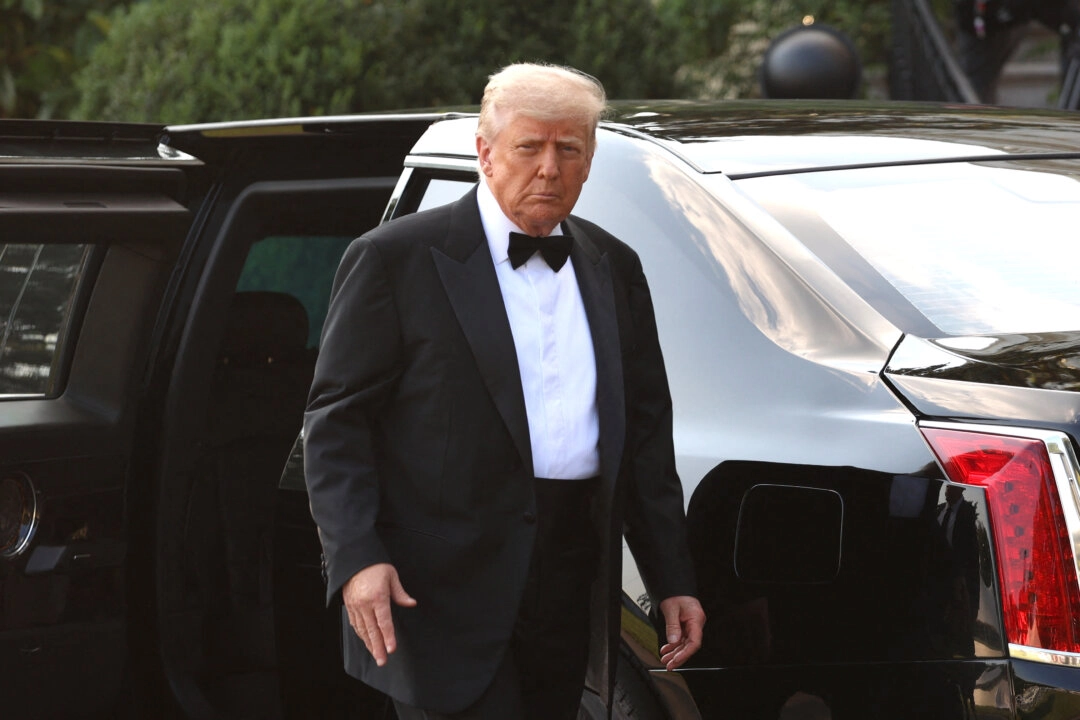
Trump made the remarks before attending a performance of “Les Miserables” at the Kennedy Center in Washington, after being asked by reporters whether he would be willing to extend the deadline for finalizing trade talks, now underway with over a dozen countries.
Trump pointed to recent agreements with China and the United Kingdom as examples of progress. “We made a great deal with China,” he said. “We’re very happy with it … and hopefully they are too. That was a very big one.”
The China deal includes continued Chinese exports of rare earths and magnets vital to U.S. industries, in exchange for a halt to U.S. efforts to revoke visas of Chinese students enrolled at American universities. While further details were not disclosed, the agreement paves the way for broader negotiations between the world’s two largest economies.
Since returning to the White House, Trump has revived his use of tariffs as a tool of economic and strategic leverage—imposing a blanket 10 percent tariff on nearly all imports, followed by a wave of reciprocal tariffs announced on April 2, which he dubbed “Liberation Day.” He then paused those higher tariffs for 90 days to allow countries to strike tailored agreements with Washington.
Asked which nations may reach agreements before the July 8 deadline, Trump said talks are ongoing with roughly 15 countries, including Japan and South Korea. He suggested that if deals are not finalized in time, his administration will send formal notices outlining non-negotiable trade terms.
“At a certain point, we’re just going to send letters out … saying, ‘This is the deal—you can take it or you can leave it. You don’t have to use it, you don’t have to shop in the United States,’” Trump said, adding that those letters could be sent within the next week or two.
Treasury Secretary Scott Bessent echoed Trump’s position in congressional testimony earlier Wednesday, saying the administration is prepared to delay tariff hikes for countries engaging in “good faith” negotiations.
“It is highly likely that those countries—or trading blocs as is the case with the EU [European Union]—who are negotiating in good faith, we will roll the date forward to continue the good-faith negotiations,” Bessent told the House Ways and Means Committee. “If someone is not negotiating, then we will not.”
Later, Bessent told senators that while the EU had initially been slow to present concrete proposals, it was now demonstrating “better faith” in its approach to the talks.
At the end of May, National Economic Council director Kevin Hassett said that three deals were nearing completion. “There are many, many deals coming,” “And there were three that basically look like they’re done.”
Similarly, Commerce Secretary Howard Lutnick said that many deals are coming.