



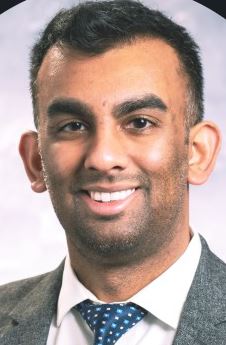

By GANESH ASAITHAMBI
In an episode of the comedy how I Met Your Mother (HIMYM), Barney Stinson introduces a fictional word: possible. The possible combines the “possible” and the “impossible” and describes the extraordinary achievements of people who refuse to accept conventional limits. In modern healthcare, possibility is no longer a joke; it has quietly become an expectation.
Physicians are expected to provide safer, faster, and more compassionate care despite increasing administrative burdens, workforce shortages, and an increasingly complex patient population. These expectations often go beyond what existing systems were designed to accommodate. Doctors are increasingly filling the gap between what the system can provide and what patients need.
Imagine this example at the end of a doctor’s day. A doctor sits down to call a patient’s family. The phone conversation lasts longer than expected with questions about your loved one’s prognosis and doubts about what to do next with fear of what is to come. The doctor provides reassurance and guidance. The doctor hangs up and discovers that the note dictations are not complete and the messages have not yet been read. None of this translates into productivity, but it is necessary to provide quality care. There are thousands of scenarios like this that occur every day in American healthcare.
These moments seem routine. But they reflect something more momentous: Health care has become quietly dependent on doctors to push beyond the boundaries of the systems in which they work.
This dependency has become normalized over time. While healthcare organizations continue to ask physicians to do more—document more thoroughly, communicate more frequently, coordinate more complex care—actual workforce capacity has remained stagnant. In response, doctors have increased the capacity of what is possible by working harder.
Doctors close this gap through additional effort. They stay later to finish notes. They return messages outside of scheduled hours. They take on additional responsibilities when staffing is low. These actions are rarely considered extraordinary. They are simply described as professionalism. However, professionalism should not require excessive and constant extension.
Burnout is frequently described as a crisis of resilience among physicians. However, it is a system design crisis. When organizations rely on sustained discretionary effort just to function, burnout is not an unexpected failure. Rather, it is the predictable result of a predictable design flaw. The possible perfectly describes this phenomenon. It represents the moment when the impossible becomes achievable only through personal sacrifice. Healthcare has always required moments of extraordinary effort. Emergencies and complex diagnoses require skill and dedication beyond standard practice. These moments are part of the identity of the profession. What is new is the expectation that extraordinary efforts will occur every day.
Sustainable systems cannot depend indefinitely on individual heroism. Over time, healthcare dependency is likely to erode morale, reduce workforce stability, and ultimately threaten the quality of care itself. Addressing burnout requires more than resilience training or symbolic gestures. It requires something health care has rarely attempted: an honest accounting of the work that sustains the system. That accounting must begin by making the invisible visible.
Healthcare has been trying to address burnout for years, including resilience training, wellness programs, and mental health resources. These efforts They are not without value, but they share a common assumption: that the problem lives within the doctor. In fact, the problem lives within the system in which we work, and the reason it persists is simpler than most would admit: we have never measured it.
The invisible labor of clinical care does not appear on any productivity dashboard. It is not reflected in any staffing model and does not generate any charges. However, it is not something peripheral to the work; Instead, it is work. It is what fills the gap between what the system was designed to offer and what patients need. We cannot redesign what we have never seen and have never looked at.
In the early 2000s, Kaplan and Anderson introduced time-driven activity-based costing (TDABC). The premise is simple: instead of asking people to estimate how they spend their time, it is measured directly. You assign costs based on actual time spent on actual activities and what gets measured gets managed.
In health we have barely adopted TDABC. Most applications focus on procedural costs, care pathway efficiency, and supply switching optimization. The methodology was used to find hidden costs in systems and was rarely used to find hidden labor within them. This is the gap worth closing.
If TDABC were applied not just to what is billed, but to everything doctors actually do, including everything that never results in a charge, the result would be something health care has never had before: a real accounting of where the invisible effort system depends, who performs it, and how much of it exists. You can’t staff what you can’t see. You cannot redesign what has never been measured. The methodology exists, but we simply have not pointed it in that direction.
AI has entered the conversation as a potential answer; However, presenting AI as the solution does not make sense. Healthcare does not have a technological deficit. Implementing AI in a system that cannot see itself clearly does not fix the system. Automate dysfunction. AI is really useful, but only as an instrument. Atmosphere Documentation tools already capture medical activity in real time. electronic medical record dates It already records when notes are completed, when messages are sent, and what time of day the work is done. Activity Capture technology It already exists to track the duration and nature of clinical tasks without adding a single documentation burden to the physician. This is the raw material for TDABC to work. The data exists; it’s just not being used to ask the right question. Instead of using that data to monitor doctors, health systems could use it to self-diagnose. Note completion patterns after midnight are not a performance issue; rather it is a signal from the system.
Once invisible work becomes visible, the subsequent consequences are not complicated. Staffing models can be built around what physicians actually do, not just what they are billed for. Workflow redesign has an evidence base rather than anecdote. Leader accountability becomes harder to avoid when data and pay reform exist, slowest lever of all, finally has something concrete to point out.
But there is something more fundamental at play than operational efficiency. High-performance systems don’t win because they do more. They win because they do the basics with consistency. pirkle has said: “Boring excellence always defeats brilliant chaos.” When the fundamentals are unreliable, no strategy deck in the world will save you. When a system fails, it is rarely a failure of effort, but rather a failure of reliability.
That is precisely what possibility has obscured. Healthcare has confused brilliant chaos—the daily heroics of a workforce that absorbs what broken systems cannot—with high performance. Brilliant chaos does not equal high performance; It’s a warning. Healthcare has always produced moments of genuine heroism: the resuscitation that shouldn’t have worked, the diagnosis made on instinct after everything else failed, or the doctor who stayed because leaving simply wasn’t an option. These moments are real. They are part of what attracts people to this job. They deserve to be recognized as extraordinary.
However, they are not extraordinary when they occur every day before lunchtime. As Ted Mosby reminds Barney in HIMYM: “Not every night can be legendary. If every night is legendary, no night is legendary.” The same goes for heroism in healthcare. When the extraordinary becomes routine, it stops being a tribute to the people who do the work. It becomes an excuse for the system that depends on them.
The possible was always intended to describe the rare and the remarkable. When a system is so poorly designed that the impossible is required just to get through a Tuesday, the possible is no longer a celebration. It becomes the new normal and no workforce can sustain a foundation based on the exceptional.
Visibility does not eliminate heroism; protects him. When systems are designed around what the job actually requires, routine doesn’t burn out doctors. They come to moments that really demand everything they have and they have something left to give.
Burnout is typically framed as a workforce issue: the well-being, retention, or sustainability of medical staff; all of these are legitimate, but they direct the consequences of invisible work to the doctor. The most uncomfortable reality is that the consequences extend to the patient.
Recall the earlier example of the doctor calling a patient’s family at the end of the workday. The doctor stayed on the line while the family worked through the fear and uncertainty. That conversation influenced what happened next. Whether the family understood the prognosis, made an informed decision about the care plan, or whether the patient returned home with appropriate support or returned to the emergency department two weeks later. None of this appears as a quality metric.
This is where the measurement gap becomes a patient safety gap. If the doctor’s invisible effort bears a burden and if it truly influences outcomes, then its absence has consequences that extend far beyond the doctor who decided not to make the same call. We simply can’t prove the full causal chain yet, and not because the connection doesn’t exist, but because we’ve never measured it.
The goal is not a health system without an extraordinary effort. It is a health system that reserves it for extraordinary circumstances. The possible should remain possible; It just shouldn’t be necessary anymore.
Healthcare has built entire quality infrastructures around measurable outcomes: door-to-needle times, readmission rates, mortality rates, and length of hospital stay. All of these metrics matter, but they measure the output of a system, not the effort that sustains it. A system that tracks results without tracking the work that produces them is flying with half its instruments in the dark. It’s time to turn on the lights.
Ganesh Asaithambi, MD, MBA, MS, is a Minnesota-based stroke neurologist with Alllina Health.


